
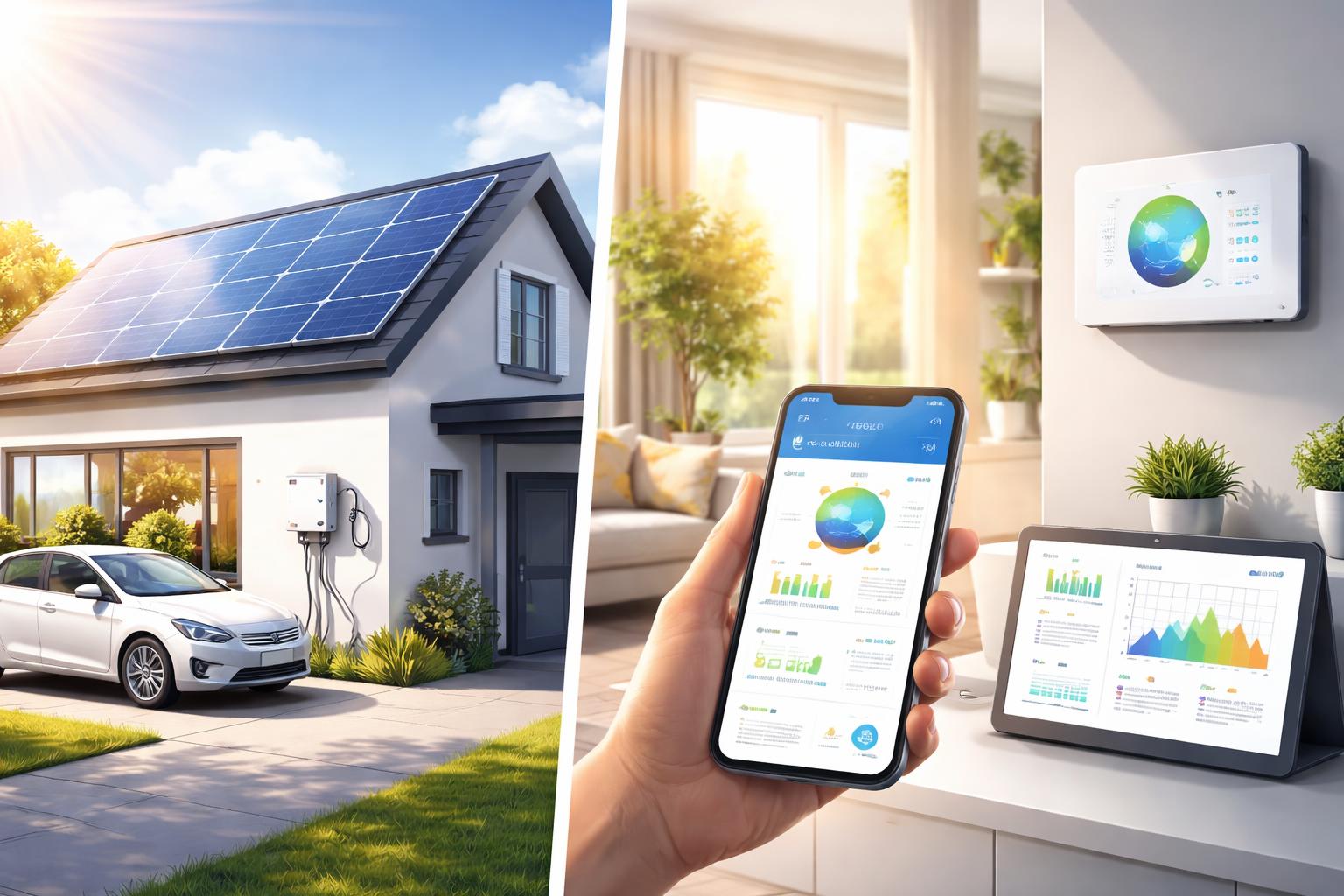
Solar vs. Home Energy Monitoring: Do You Really Need Both for Your Smart Home?
Your electric bill showed up higher than you expected again, and you have no idea why. You want to save money and be more energy-efficient, but figuring out where all your power goes feels like a guessing game. Is it the old fridge, the kids’ gaming setup, or something else entirely?
Understanding Your Home's Energy Use
Understanding your home's energy consumption is the first step to saving money and making smart upgrades. Just like you check your bank statement to see where your money goes, energy monitors show you where your electricity is being spent. This insight lets you make informed decisions, whether that means adjusting habits or replacing old appliances.Many homeowners feel frustrated by high bills and a lack of control. You might turn off lights and unplug chargers, but still see a big number at the end of the month. Energy monitoring takes the guesswork out, giving you real data to work with.
What is a Home Energy Monitor?
A home energy monitor is a device that tracks your entire household's electricity usage. It tells you how much power your home is consuming at any given moment, or over time. This includes everything from your HVAC system to your toaster.Think of it as a fitness tracker for your home’s electricity. It shows you activity levels, peak usage times, and overall trends. This information helps you pinpoint energy hogs and understand your daily patterns.
How a Home Energy Monitor Works
Most home energy monitors work by installing special sensors, called current transformers (CT) clamps, around the main power lines inside your electrical panel. These clamps measure the flow of electricity. The monitor then sends this data to a hub, which processes it and sends it to an app on your smartphone or a web dashboard.Some advanced monitors use algorithms to identify individual appliances based on their unique power signatures. This “disaggregation” lets you see not just total usage, but often the power draw of your oven, refrigerator, or washing machine separately.
E-E-A-T Tip: Installing CT clamps can be tricky, especially in older, crowded electrical panels. You might need to move some wires to get the clamps properly seated, or even consider hiring an electrician if you’re not comfortable working inside the main panel. Always turn off the main breaker before opening your electrical panel.
Top Home Energy Monitors to Consider
These devices help you see your total home energy use, often with details about individual circuits or appliances.Sense Energy Monitor
The Sense Energy Monitor is best for homeowners who want detailed appliance monitoring without individual smart plugs. It tries to identify specific devices by their unique electrical signatures.A limitation is that Sense relies on pattern recognition, so it won’t identify every single appliance, especially newer, more efficient ones or those that don’t have distinct electrical signatures.
Emporia Vue Energy Monitor
The Emporia Vue Energy Monitor is best for homeowners who want granular circuit-level monitoring at a more budget-friendly price. It offers 16 individual circuit sensors in addition to the main clamps.Its primary limitation is that installing 16 individual sensors can make your electrical panel extremely crowded, requiring careful wire management and potentially professional installation.
Shelly EM
The Shelly EM is best for the DIY smart home enthusiast who wants local control and integration with platforms like Home Assistant. It's a small, open-source friendly device.One downside is that it requires some technical know-how for setup and integration, making it less plug-and-play for beginners.
What is Solar Energy Monitoring?
Solar energy monitoring specifically tracks the electricity generated by your solar panels. It tells you how much power your system is producing, whether it's feeding back into the grid, or if there are any performance issues.If you have solar panels, this system is crucial for ensuring they are working efficiently. It helps you maximize your investment and quickly spot any problems that might reduce your energy production.
How Solar Monitoring Works
Solar monitoring systems are usually built directly into your solar inverter or come as a separate gateway device. They collect data from your solar panels, such as power output, voltage, and current. This data is then sent to a cloud service or a local hub, which you can access via a web portal or a mobile app.These systems often provide real-time and historical data, showing you how much energy your panels produced hourly, daily, monthly, and yearly. They can also alert you to potential issues, like a shaded panel or an inverter malfunction.
Top Solar Monitoring Systems
These systems are typically bundled with your solar panel installation but can sometimes be added or upgraded.Enphase IQ Gateway
The Enphase IQ Gateway (formerly Envoy) is best for homes with Enphase microinverters, offering detailed, panel-level monitoring. You can see how each individual solar panel is performing.A limitation is that it’s specific to Enphase systems, so it won’t work with other inverter brands.
SolarEdge Monitoring System
The SolarEdge Monitoring System is best for homeowners with a SolarEdge inverter and power optimizers, providing string-level and optimizer-level data. It's known for its user-friendly interface.Its main drawback is that it’s exclusive to SolarEdge equipment and not compatible with other solar setups.
Do You Need Both? The Key Differences
This is where many homeowners get confused. Solar monitoring tells you what your panels are producing. Home energy monitoring tells you what your house is consuming.Having solar monitoring alone is like knowing how much money you earn, but not how much you spend. You see your income, but you don’t truly understand your net financial position or where all your money goes. This is a common mistake: assuming that because your solar panels are producing, you’re automatically saving as much as you could be.
A home energy monitor adds the spending side of the equation. It shows you the total picture: how much electricity you’re generating AND how much you’re using. This allows you to optimize your energy consumption to match your solar production, or identify times when you’re importing expensive grid power.
For instance, if your solar panels produce the most power at midday, but your dishwasher runs at night, a home energy monitor will highlight this mismatch. You could then adjust your routine to run the dishwasher during peak solar production, effectively using your own free electricity.
This holistic view is particularly important for homeowners with time-of-use (TOU) electricity plans, where power costs vary throughout the day. By seeing both production and consumption, you can schedule high-drain appliances to run when solar production is high and grid prices are low.
You can even integrate these systems with smart home hubs like Home Assistant Energy Dashboard to create automated routines. For example, if your solar production exceeds your usage by a certain amount, Home Assistant could automatically turn on your pool pump or start charging your electric vehicle. This kind of automation is key to maximizing savings. For more on optimizing your routines, check out Smart Home Routines That Actually Save You Time & Money.
What to Look For Before You Buy
- Installation Complexity: Some monitors are DIY-friendly, while others might require an electrician due to the need to work inside your main electrical panel. Make sure you're comfortable with the process or budget for professional help.
- Data Granularity: Do you want just total home usage, or do you need circuit-level or even appliance-level insights? Higher granularity often means more sensors and a more complex installation.
- Integration & Ecosystem: Consider if the monitor works with your existing smart home hub (like Home Assistant, SmartThings, or Alexa) or if it operates as a standalone system. Some offer robust APIs for advanced users.
- Monitoring Interface & App: A good app provides clear, easy-to-understand data, historical reports, and customizable alerts. A cluttered or confusing interface can make the data less useful.
- Wireless Connectivity: Check if the device relies on Wi-Fi, Ethernet, or another protocol. Ensure you have strong Wi-Fi signal in your electrical panel's location, as interference from thick walls or metal can be an issue.
Comparison Table: Home vs. Solar Energy Monitoring
| Feature | Home Energy Monitor | Solar Energy Monitoring |
|---|---|---|
| Primary Focus | Total electricity consumed by your entire home. | Electricity generated by your solar panel system. |
| Installation | CT clamps installed in main electrical panel, typically DIY-friendly but can be complex in crowded panels. | Often integrated with solar inverter or dedicated gateway, usually installed by solar professionals. |
| Data Provided | Real-time total consumption, historical usage trends, often appliance/circuit breakdown (disaggregation). | Real-time solar production, historical generation, panel-level performance (with microinverters/optimizers). |
| Purpose | Identify energy waste, reduce electricity bills, optimize appliance usage. | Verify solar system performance, detect faults, track environmental impact, ensure maximum power output. |
| Who Benefits Most | Any homeowner looking to save money and be more efficient, especially those with high bills. | Homeowners with solar panels who want to ensure their investment is performing as expected. |
Who Should Buy This
The Energy Saver
You're a homeowner without solar panels, but you're tired of mysterious electricity bills. You want to understand where your money is going so you can make changes. A home energy monitor is your starting point for significant savings.The Solar Optimizer
You have solar panels and already monitor their production. Now, you want to get more out of your system by intelligently using your self-generated power. Adding a home energy monitor will show you how to truly align your usage with production.The Tech-Savvy Homeowner
You love data and want to integrate everything into your smart home system, perhaps using Home Assistant. You're comfortable with a slightly more involved setup to gain granular insights and create custom automations based on both production and consumption.Frequently Asked Questions
Can a home energy monitor tell me about individual appliances? Some advanced home energy monitors use algorithms to infer individual appliance usage, while others require individual CT clamps on specific circuits for more precise readings. The accuracy of appliance disaggregation varies by monitor and appliance type.Is solar monitoring required for my system? While not always strictly “required” by law, solar monitoring is almost always included with modern solar panel installations. It’s crucial for verifying system performance, identifying potential issues, and often for claiming solar incentives or warranties.
Do these systems work without Wi-Fi? Most modern home and solar energy monitors rely on Wi-Fi to send data to their cloud services and your smartphone app. Some might have local storage or an Ethernet port as a backup, but Wi-Fi is generally essential for their full functionality.
How accurate are these monitors? The accuracy of these monitors is generally very high, typically within 1-5% of your utility meter. However, factors like proper installation of CT clamps, electrical noise, and calibration can influence precise readings.
Can I use these monitors to qualify for energy rebates? While energy monitors provide data to help you save energy, they don’t directly qualify you for rebates in most cases. However, the data they provide can help you identify areas for upgrades (like efficient appliances or insulation) that do qualify for rebates.