
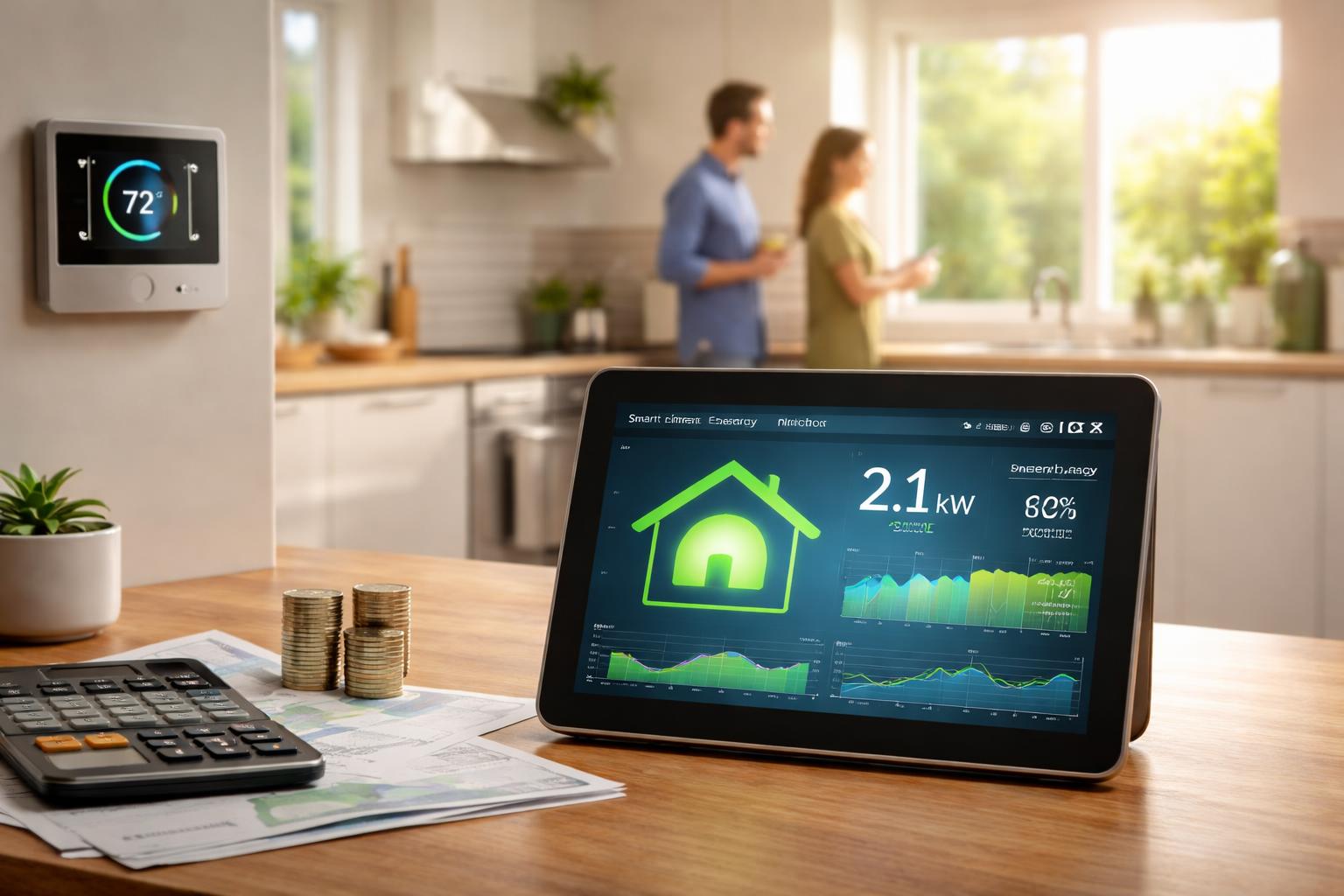
How Much Does a Smart Home Energy Monitoring System Cost? (Average Prices & ROI)
Do you ever open your electricity bill and wonder exactly where all that money went? You’re not alone if you feel frustrated by high utility costs and have no idea which devices are truly to blame. A smart home energy monitoring system gives you the power to see exactly what’s happening with your home’s electricity usage, helping you stop the guessing game and take control.
What is a Smart Home Energy Monitoring System?
A smart home energy monitoring system is like a personal financial tracker for your electricity. It tracks how much power your home uses, where it’s being used, and when. This information helps you understand your energy habits.These systems connect to your home’s electrical panel. They can provide real-time data, showing you exactly how much electricity you’re consuming at any moment. Some even break down usage by individual appliances.
Imagine knowing precisely how much your old refrigerator is adding to your bill. Or seeing the cost of leaving lights on in unused rooms. This knowledge helps you make smart choices to save money.
Understanding the Types of Energy Monitors
Not all energy monitors are created equal. They vary in how they track energy and what kind of detail they provide. Knowing the differences helps you choose the right fit for your home and goals.Some systems focus on your entire home’s usage. Others dig deeper, showing you energy consumption for specific circuits or even individual devices. Your choice depends on how much detail you want and how involved you’re willing to get with installation.
Whole-Home Clamp-On Monitors
These are some of the most common types of energy monitors. They typically involve installing sensors, called current transformers or CT clamps, around the main service wires in your electrical panel. These clamps measure the flow of electricity into your entire home.You then get data sent to an app on your phone. This shows you your total energy consumption in real-time. Many systems also include smaller clamps to monitor individual circuits, giving you more granular insights.
Installing these usually means working inside your electrical panel. This involves high-voltage electricity, so many homeowners prefer to hire a qualified electrician for safety. This ensures the device is installed correctly and safely.
Plug-In Smart Plugs (Appliance-Level)
For a simpler, less intrusive option, smart plugs are excellent. These devices plug into a standard wall outlet. You then plug an appliance directly into the smart plug.The smart plug monitors the energy usage of that specific appliance. It sends the data to an app on your phone. This is perfect for identifying energy hogs among your smaller electronics and appliances.
Smart plugs are easy to set up and don’t require an electrician. However, they only work for individual, plug-in devices. They won’t monitor hardwired appliances like your oven, water heater, or central air conditioning.
Smart Electrical Panels
The most comprehensive, but also most involved, option is a smart electrical panel. This system completely replaces your existing electrical panel. It offers integrated energy monitoring and control for every circuit in your home.With a smart panel, you can see energy usage down to individual circuits. You can even remotely turn off power to specific circuits from your phone. This offers unparalleled control and insight into your home’s energy.
These systems are a significant upgrade and require professional installation by a licensed electrician. They are often best suited for new home constructions or major home renovations where an electrical panel replacement is already planned. This level of monitoring is also ready for future energy technologies like solar and EV chargers.
Popular Smart Home Energy Monitors and What They Offer
Several excellent energy monitoring systems are available today. Each has its strengths and is designed with different types of homeowners in mind. Here's a look at some of the top choices.Sense Energy Monitor
The Sense Energy Monitor is best for homeowners who want a detailed, appliance-level breakdown without installing smart plugs on every device. It uses advanced artificial intelligence to "listen" to your home's electricity and identify individual appliances. This means it can tell you when your microwave ran or how much energy your dryer used.One real limitation of Sense is that its AI takes time to learn your home. You might not get perfect, instant appliance identification on day one. It can sometimes misidentify devices or miss smaller ones entirely as it continues to learn over weeks and months. Expecting instant, perfect appliance identification is a common mistake; patience is key.
Emporia Vue Energy Monitor
The Emporia Vue Energy Monitor is best for budget-conscious homeowners who want solid whole-home and circuit-level monitoring. It provides real-time data on your entire home's energy use, plus individual circuit monitoring if you install additional sensors. This gives you a clear picture of which parts of your home consume the most power.A limitation is that while its app provides clear, functional data, it can feel less polished or intuitive than some competitors. Identifying specific appliances still relies on you knowing which circuit they’re on or adding individual smart plugs for more detail. It doesn’t use AI to guess appliances like Sense does.
Shelly EM
The Shelly EM is best for DIY smart home enthusiasts who want raw data and deep integration with platforms like Home Assistant. It’s a versatile device that offers whole-home or individual circuit monitoring. You can use its two independent measuring channels to track different aspects of your energy consumption.A downside is that Shelly EM requires more technical know-how for installation and setup compared to more user-friendly consumer products. Its native app is basic, meaning many users prefer to integrate it into a more comprehensive smart home system for better data visualization and control. This makes it less of a plug-and-play solution for the average homeowner.
SPAN Smart Panel
The SPAN Smart Panel is best for new home builders or those undertaking major electrical overhauls who want the ultimate in circuit control and energy management. It completely replaces your traditional electrical panel, offering granular monitoring and remote control over every circuit in your home. This allows you to manage loads, prioritize power sources, and prepare for future energy needs like solar and EV charging.The significant limitation is that the SPAN Smart Panel is a substantial investment and requires professional installation. It’s not a simple add-on device but a full electrical panel replacement, making it unsuitable for most existing homes without a planned, extensive electrical upgrade. This is typically a project for new construction or a very comprehensive renovation.
What to Look For Before You Buy
Choosing the right energy monitor means considering a few key factors. Thinking about these points will help you find a system that truly meets your needs. Don't rush into a purchase without understanding what's important for your home.- Installation Difficulty: Decide if you’re comfortable with a DIY setup or if you prefer professional installation. Some devices simply plug in, while others require working inside your electrical panel, which is best left to an electrician.
- Monitoring Granularity: Do you want to see your total home usage, specific circuits, or individual appliances? Systems vary widely in the detail they provide, so choose one that matches your desired level of insight.
- Integration with Smart Home System: Check if the monitor works with your existing smart home platform, like Google Home or Alexa. Compatibility ensures all your smart devices can communicate and work together smoothly.
- Data Reporting and App Quality: Look for clear, easy-to-understand data reports and an intuitive mobile app. You want to easily track real-time usage, view historical data, and get alerts for unusual consumption patterns.
- Future-Proofing: If you plan on adding solar panels, an electric vehicle (EV) charger, or a home battery in the future, ensure the energy monitor can track and manage these additional energy sources. Some systems are designed with these expansions in mind.
Comparison Table: Energy Monitors at a Glance
This table offers a quick comparison of popular smart home energy monitoring systems. It highlights key features to help you see their differences side-by-side. Use it to narrow down your choices based on what matters most to you.| Feature | Sense Energy Monitor | Emporia Vue Energy Monitor | Shelly EM | SPAN Smart Panel |
|---|---|---|---|---|
| Type | Whole-Home/AI Appliance Detection | Whole-Home/Circuit Monitoring | Whole-Home/Circuit Monitoring | Smart Electrical Panel Replacement |
| Installation | Electrician Advised (Inside Panel) | DIY or Electrician (Inside Panel) | DIY or Electrician (Inside Panel) | Professional Only (Full Panel Replacement) |
| Monitoring Detail | AI-driven Appliance Identification | Detailed Circuit-level & Whole-Home | Raw Circuit-level & Whole-Home | Individual Circuit Control & Monitoring |
| Key Advantage | Automatically identifies many appliances | Affordable, accurate, detailed circuit data | Open-source friendly, highly flexible | Ultimate circuit control, solar/EV ready |
| Best For | Deep insights into individual device use | Budget-conscious homeowners wanting circuit data | DIY smart home builders, Home Assistant users | New builds or major electrical renovations |
Who Should Buy a Smart Home Energy Monitoring System
An energy monitoring system isn't for everyone, but certain types of homeowners will find it incredibly valuable. If any of these descriptions sound like you, it might be time to consider one. These systems offer specific benefits to those ready to take control of their energy use.- The Energy Detective: If you're constantly trying to pinpoint hidden energy drains and phantom loads, an energy monitor will give you the tools you need. You can finally identify those mysterious spikes in your electricity bill and take action.
- The Budget Balancer: For anyone looking to actively cut down on monthly utility bills, an energy monitor provides the data to make smart changes. It helps you see the financial impact of your habits and find easy ways to save money.
- The Eco-Conscious Homeowner: If reducing your carbon footprint is a priority, understanding your energy consumption is a crucial first step. These systems help you optimize your home's efficiency and contribute to a greener lifestyle.
- The Smart Home Enthusiast: If you love data and integrating devices into a cohesive smart home, an energy monitor offers another layer of control and automation. You can use energy insights to trigger other smart home routines, making your home even smarter.
Return on Investment (ROI) and Long-Term Savings
While an energy monitoring system has an upfront cost, it's an investment that often pays for itself over time. The return on investment (ROI) comes from the money you save on your electricity bills. By making informed changes, you can significantly reduce your energy consumption.Think of it this way: the monitor identifies where you’re wasting energy. Maybe you discover your old fridge is costing you a fortune, or you’re leaving too many devices plugged in. With this knowledge, you can replace inefficient appliances, unplug phantom loads, or adjust your usage habits. For instance, knowing when peak rates apply can help you shift laundry to off-peak hours.
Many homeowners report seeing noticeable reductions in their bills within months. The specific savings depend on your existing habits and how actively you use the data. The faster you act on the insights, the quicker you’ll see your initial investment covered and start saving money long-term. Combining these insights with Smart Home Routines That Actually Save You Time & Money can lead to even greater efficiency.