
Disclosure: This article contains affiliate links. As an Amazon Associate, we earn from qualifying purchases at no extra cost to you.
You’ve probably got smart lights from one brand, a thermostat from another, and maybe some security cameras that demand yet another app. Sound familiar? Trying to make all these different gadgets talk to each other can feel like herding cats.
You find yourself constantly switching between apps just to dim the lights and adjust the temperature. It’s supposed to make your life easier, not more complicated.
What Even is a Matter Hub, Anyway?
Imagine your smart home devices speaking different languages. Your Philips Hue lights speak “Hue-ese,” your Nest thermostat speaks “Nest-ish,” and your Ring doorbell speaks “Ring-lish.” They can’t understand each other without a translator.
Matter is like a universal translator for smart home devices. It’s a new standard that lets devices from different brands communicate directly, regardless of who made them.
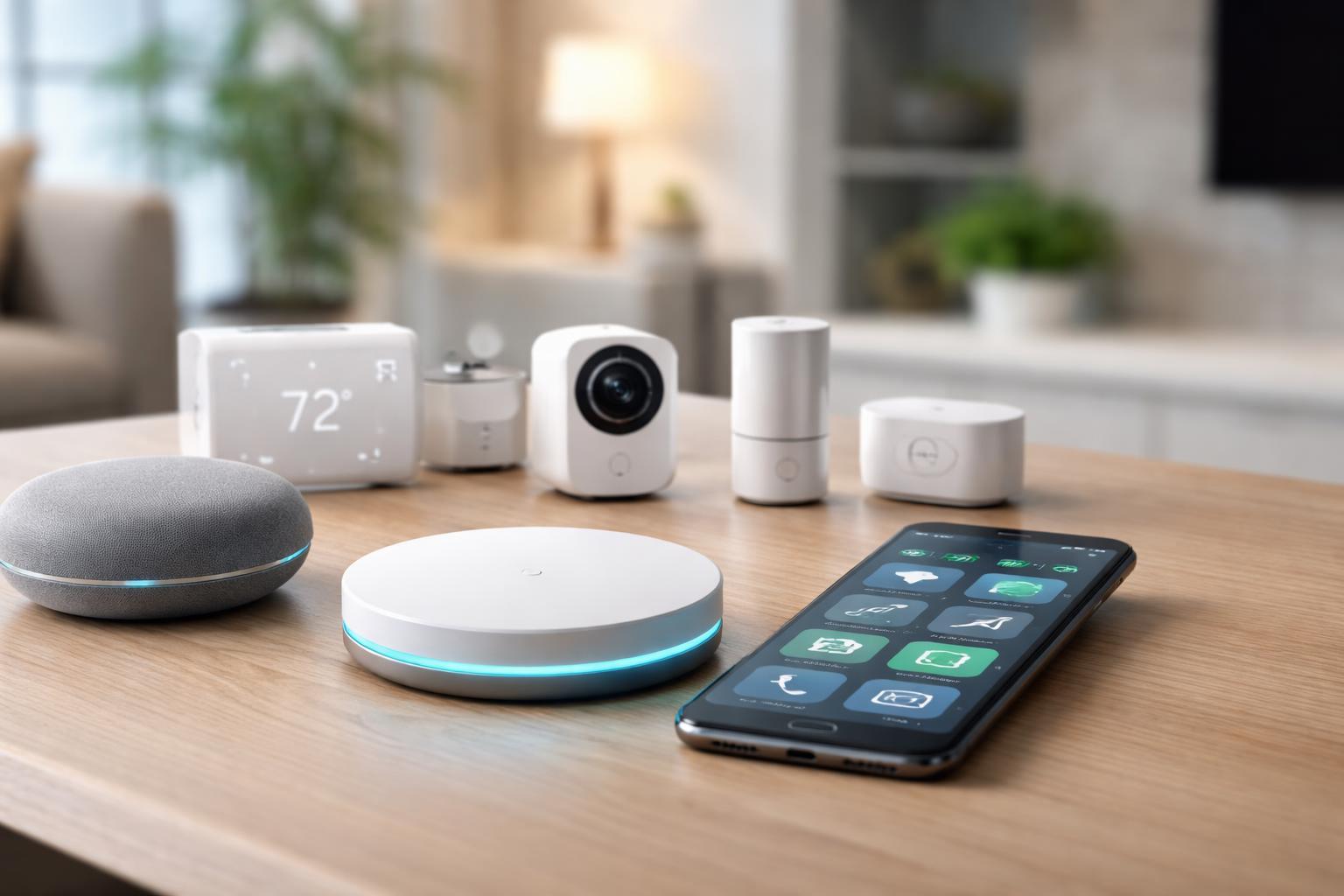
A Matter hub is the central device in your home that enables this communication. It acts as a bridge, bringing all your Matter-compatible gadgets together under one roof, often using a technology called Thread.
Think of it as the conductor of your smart home orchestra, making sure every instrument plays in harmony. It lets you control everything from a single app, whether it’s Apple Home, Alexa, or Google Home.
Why a Matter Hub Makes Sense for Your Smart Home in 2026
In 2026, Matter is growing up. More and more devices are coming out with Matter support, making a central hub more valuable than ever.
Future-Proofing Your Home
Buying smart devices can feel like a gamble. Will this gadget work with my next phone? Will this brand disappear next year? Matter aims to solve this.
With a Matter hub, you’re investing in a system that’s designed to last. Devices that support Matter are built to work together, no matter the brand, protecting your purchases for years to come.
Simplified Setup and Control
Remember that frustration of having too many apps? A Matter hub helps you avoid that. Setting up new devices becomes much simpler.
You can often add a new Matter device by just scanning a QR code. Then, you control everything from your preferred smart home app, whether it’s the Apple Home app, the Alexa app, or the Google Home app.
Local Control for Speed and Reliability
Many smart devices rely on the internet to function. If your Wi-Fi goes down, so does your smart home. That’s not ideal when you want to turn on a light.
Matter hubs can often allow for local control. This means your devices talk to each other directly in your home, without needing to send commands through the cloud. It’s faster, more reliable, and still works even if your internet connection is temporarily out.
Enhanced Privacy and Security
When devices communicate locally, your data stays in your home. This is a big win for privacy-conscious homeowners.
Matter also has strong security built-in from the ground up. This means less worry about your smart home being compromised, giving you more peace of mind.
The Best Matter Hubs You Can Buy Today
Most major smart home ecosystems offer Matter hubs, often built into their existing smart speakers or displays. These devices act as “Thread Border Routers,” which is a fancy way of saying they connect your Thread-based Matter devices to your home Wi-Fi network.
Apple HomePod Mini
The Apple HomePod Mini is best for those already deep into the Apple ecosystem or planning to be. It doubles as a great smart speaker and integrates perfectly with Apple HomeKit.
It acts as a Matter controller and a Thread border router, connecting your Matter devices to your Apple Home environment. You can ask Siri to control your lights, thermostats, and more, even if they’re from different brands.
One limitation is that it tends to keep you within the Apple ecosystem for the best experience. While it works with Matter, setting up and managing devices is primarily done through the Apple Home app.
Amazon Echo (4th Gen)
The Amazon Echo (4th Gen) is an excellent choice if you’re an Alexa user. It offers a powerful smart speaker experience and includes built-in Matter and Thread support.
This spherical Echo device connects your Matter-compatible gadgets to your Alexa system. You can use voice commands to control a wide range of devices, even if they weren’t originally designed for Alexa.
A downside is that while it supports Matter, Amazon often prioritizes its own Alexa-specific features and device integrations, which can sometimes make cross-ecosystem control feel less native than within the Alexa world.
Google Nest Hub (2nd Gen)
If your home runs on Google Assistant, the Google Nest Hub (2nd Gen) is a strong contender. This smart display offers visual control of your smart home alongside its Matter hub capabilities.
It brings Matter and Thread support to your Google Home setup, allowing you to manage various devices from its touchscreen or with voice commands. It’s great for seeing your security camera feeds or adjusting your thermostat visually.
Its main limitation is that it’s primarily a display device. While it handles Matter well, its core function is as a smart screen, which might be overkill if you just need a simple hub without a display.
Samsung SmartThings Hub (v3)
The Samsung SmartThings Hub (v3) is best for users who have a mix of Zigbee, Z-Wave, and now Matter devices. It’s known for its broad compatibility beyond just Wi-Fi or Thread.
This hub acts as a central brain for a truly diverse smart home, bridging many different communication protocols. It gives you advanced automation options and deep control over all your connected gadgets.
A minor drawback is that while it supports Matter, older SmartThings hubs might need an update or a separate dongle to fully support Thread devices. Always check your specific model for full Matter and Thread capabilities.
What to Look For Before You Buy
- Your Current Smart Home Ecosystem: Do you mostly use Apple, Amazon, or Google devices? Choose a Matter hub that naturally fits with your existing setup for the best user experience.
- Other Wireless Protocols You Use: If you have many Zigbee or Z-Wave devices, you might need a hub like SmartThings that supports these older, but still common, technologies alongside Matter.
- Your Home’s Internet and Wi-Fi Setup: Matter devices that use Thread rely on a mesh network created by your hub and other Thread devices. Ensure your hub is centrally located for the best signal and network coverage.
- Privacy and Data Control: Consider how much local control you want versus cloud reliance. Matter emphasizes local control, but some hubs still lean more on their specific cloud services for advanced features.
- Future Expansion Plans: Think about what smart devices you might add later. A Matter hub offers excellent flexibility, but ensure it supports the ecosystems and types of devices you foresee buying.
Comparison Table: Top Matter Hubs
| Feature | Apple HomePod Mini | Amazon Echo (4th Gen) | Google Nest Hub (2nd Gen) | Samsung SmartThings Hub (v3) |
|---|---|---|---|---|
| Primary Ecosystem | Apple Home (Siri) | Amazon Alexa | Google Home (Assistant) | SmartThings |
| Matter Support | Yes (Thread Border Router) | Yes (Thread Border Router) | Yes (Thread Border Router) | Yes (Thread Border Router) |
| Additional Protocols | None (Focus on Wi-Fi, Thread) | Zigbee (Older models), Wi-Fi | None (Focus on Wi-Fi, Thread) | Zigbee, Z-Wave, Wi-Fi |
| Display | No | No | Yes (7-inch touchscreen) | No |
| Key Benefit | Seamless Apple integration | Strong Alexa voice control | Visual control and display | Broadest protocol support |
Who Should Buy This
The “Starting Fresh” Homeowner: If you’re building a smart home from scratch or tired of your current disjointed setup, a Matter hub provides a strong, unified foundation for your future devices. It helps you avoid compatibility headaches right from the start.
The “Multi-Brand Frustrated” User: Do you have smart devices from five different manufacturers and five different apps? A Matter hub helps bring them all together under one main app, simplifying your daily routine.
The “Privacy-Focused” Individual: If you value local control and want less of your smart home data going through the cloud, a Matter hub, especially with Thread devices, offers a more secure and private smart home experience.
For anyone looking to streamline their smart home and avoid vendor lock-in, a Matter hub is a crucial piece of the puzzle. It creates a more reliable and cohesive system that works the way you expect.
Frequently Asked Questions
Do I need a new hub if I already have smart devices?
Not necessarily. Many existing smart speakers and displays, like those from Apple, Amazon, and Google, have been updated to act as Matter hubs. You should check if your current devices are Matter-compatible before buying anything new.
Can Matter devices work without a hub?
Matter devices that use Wi-Fi can often connect directly to your home network without a dedicated hub. However, Matter devices that use Thread *do* need a Thread border router (which is often built into a Matter hub) to connect to your Wi-Fi network and communicate with other devices.
Is Matter truly secure?
Yes, security is a core part of Matter’s design. It uses strong encryption for communication and requires authentication for device pairing. This helps protect your smart home from unauthorized access and ensures your data stays private, especially with local control.
What’s the difference between a Matter controller and a Matter hub?
A Matter controller is any device, like your phone or a smart speaker, that you use to send commands to Matter devices. A Matter hub, specifically one with a Thread border router, is a device that connects Thread-based Matter devices to your home network and allows them to communicate with Matter controllers. Many hubs also act as controllers.
Final Verdict
For most homeowners looking for a unified, reliable, and future-proof smart home, the Amazon Echo (4th Gen) offers the best balance of features, value, and widespread compatibility as a Matter hub in 2026. Its integration with Alexa provides an intuitive voice control experience that many already use.
Consider upgrading to or integrating a Matter hub into your smart home plan this year, especially if you’re tired of managing countless apps and want your devices to truly work together. To get started, take a look at our Smart Home Automation for Beginners: A Complete Checklist for 2026 to plan your setup.