
Disclosure: This article contains affiliate links. As an Amazon Associate, we earn from qualifying purchases at no extra cost to you.
Is a Smart Pet Feeder Right for Your Apartment? The Beginner’s Guide to Automated Feeding
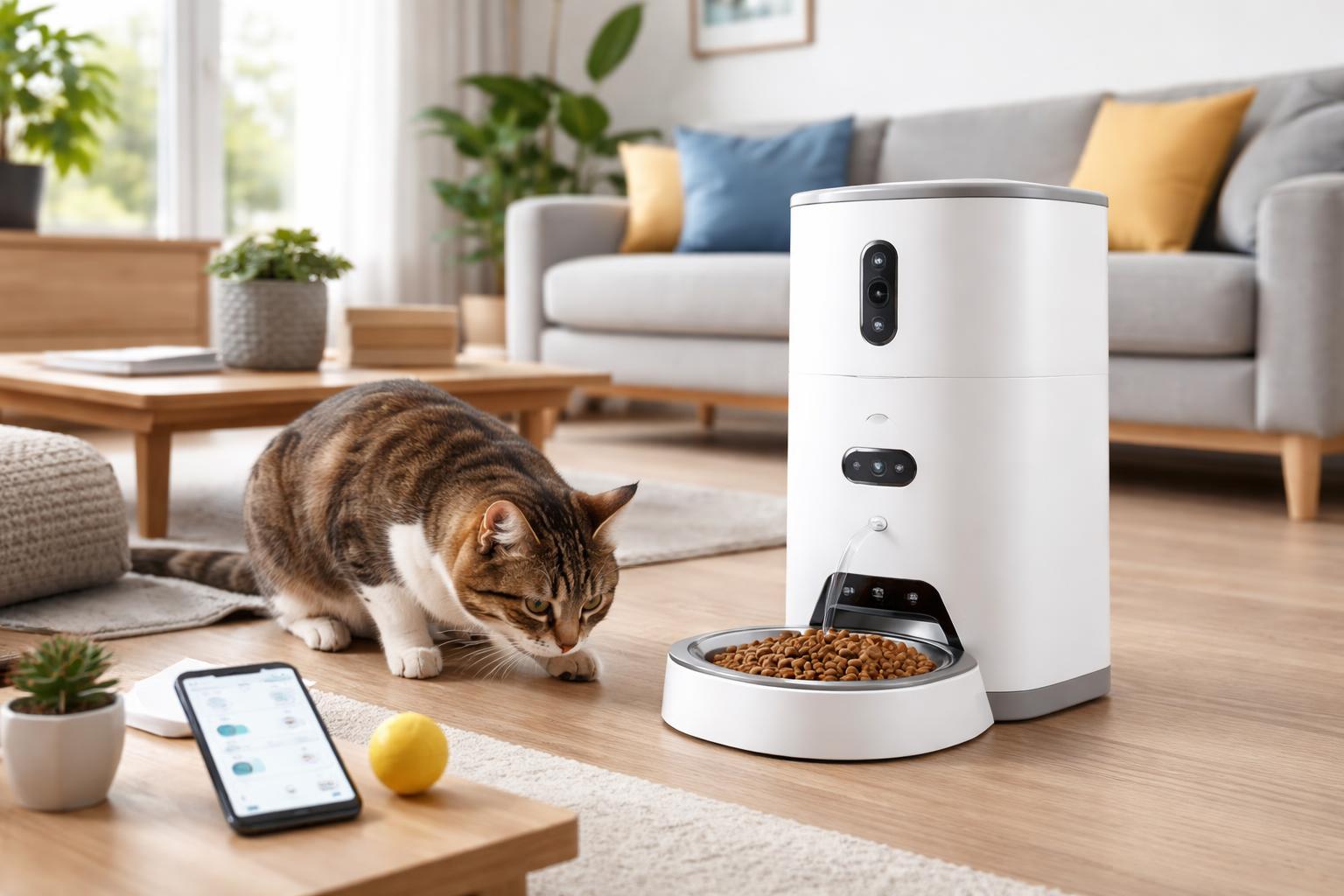
Yes, a smart pet feeder can be an excellent and often indispensable addition to an apartment, offering unmatched convenience, precise portion control, and peace of mind for busy pet parents. Apartment living often means adapting to tighter schedules, managing space efficiently, and ensuring your furry friend receives the best care even when you’re not physically present. A smart pet feeder steps in as a reliable assistant, automating meal times and helping maintain a consistent routine that benefits both you and your pet. This guide will walk you through everything you need to know about integrating smart feeding technology into your apartment lifestyle, helping you decide if it’s the right choice for your household.
Why Consider a Smart Pet Feeder for Apartment Living?
Apartment life, while convenient in many ways, presents unique challenges for pet owners. From unpredictable work schedules to spontaneous weekend getaways, ensuring your pet is fed on time and in the right quantity can be a constant worry. Smart pet feeders are designed to alleviate these concerns, offering a host of benefits tailored for the modern apartment dweller.
Convenience for Busy Schedules
One of the most compelling reasons to invest in a smart pet feeder is the sheer convenience it offers. Life in the city often comes with demanding jobs, long commutes, and social commitments. With a smart feeder, you no longer have to rush home to make sure your pet gets their dinner or worry if you’re running late. These devices can be programmed to dispense food at precise times throughout the day, ensuring your pet’s meals are never missed, even when your schedule goes awry. Enjoy the flexibility to attend that after-work event or hit the gym without guilt.
Portion Control and Weight Management
Maintaining a healthy weight is crucial for pets, especially those living in apartments where opportunities for extensive exercise might be limited. Smart pet feeders excel at portion control. You can accurately set the amount of food dispensed at each meal, preventing overfeeding and helping to manage or prevent obesity-related health issues. This precision is invaluable for pets on a strict diet or those prone to gaining weight. Many feeders allow multiple small meals daily, which can aid digestion and prevent your pet from feeling overly hungry.
Peace of Mind While Away
Whether you’re away for a few hours or an entire weekend, a smart pet feeder provides unparalleled peace of mind. Many advanced models connect to Wi-Fi, allowing you to monitor feeding activity, dispense food remotely, and even see or talk to your pet through an integrated camera and microphone. This means you can check in on your pet’s meal status from your office or even another country. Knowing your pet is fed on schedule and that you can intervene if needed greatly reduces anxiety for both you and your furry companion.
Addressing Multi-Pet Households
Managing multiple pets, especially if they have different dietary needs or eating habits, can be tricky in an apartment. A common issue is one pet eating another’s food. While a general smart feeder distributes meals, specialized feeders offer advanced solutions. Feeders like the SureFeed Microchip Pet Feeder use your pet’s existing microchip or an RFID collar tag to ensure only the designated pet can access the food, effectively preventing food theft and managing specific diets for each animal. This is incredibly useful where separate feeding spaces might be limited.
Maintaining Routine
Pets thrive on routine. Consistent feeding times help regulate their digestion, reduce anxiety, and can even improve behavior. A smart pet feeder ensures this consistency, delivering meals at the same precise times every day, regardless of your personal schedule fluctuations. This predictability is particularly beneficial for pets prone to stress or those with sensitive stomachs, fostering a sense of security and well-being in their apartment environment.
Types of Smart Pet Feeders
The world of smart pet feeders offers a variety of options, each designed to meet different needs and budgets. Understanding the distinctions will help you choose the best fit for your apartment and your pet.
Programmable Automatic Feeders
These are the foundational smart feeders, typically featuring an LCD screen and buttons for manual programming. You can set specific meal times and portion sizes directly on the device. While they don’t offer remote control via an app, they are reliable for establishing a consistent feeding schedule. They are an excellent entry-level option for those who want automation without needing advanced connectivity features.
WiFi-Enabled Smart Feeders
Stepping up in features, WiFi-enabled smart feeders are where true convenience for apartment living shines. These devices connect to your home’s Wi-Fi network and are controlled via a smartphone app. This connectivity unlocks a range of advanced functionalities:
- Remote Feeding: Dispense food instantly from anywhere using your phone.
- Scheduled Feeding: Program and adjust meal schedules and portion sizes from your app.
- Feeding History: Track when and how much your pet has eaten.
- Voice Recording: Record a personalized message to play at meal times.
- Integrated Camera (on some models): Monitor your pet, take photos, or even have two-way audio communication. Products like the WOPET Smart Pet Feeder often include camera capabilities, allowing you to visually check on your pet’s feeding habits. Other reliable WiFi options, such as the Petlibro Automatic Feeder WiFi, focus on seamless scheduling and remote control for peace of mind.
These feeders are ideal for apartment dwellers who value flexibility, remote control, and the ability to monitor their pet’s well-being from a distance.
Microchip/RFID Feeders
As mentioned earlier, microchip or RFID feeders are a specialized category for multi-pet homes or for pets with specific dietary requirements. These feeders only open for a pet whose microchip or RFID collar tag they recognize. This prevents other pets from stealing food or accessing diets not meant for them. For apartment living with limited space to separate pets during meals, this technology is a game-changer, ensuring each pet gets exactly what they need without supervision. The SureFeed Microchip Pet Feeder is a prime example of this type of intelligent feeder.
Key Features to Look for in a Smart Pet Feeder
When selecting a smart pet feeder for your apartment, several features can significantly impact its utility and your satisfaction. Consider these aspects to ensure you choose a device that perfectly fits your needs.
Capacity
Feeder capacity refers to how much dry food the dispenser can hold. For apartment dwellers, balance between a feeder that’s too bulky for limited space and one that requires constant refilling. Consider your pet’s size, eating habits, and how long you typically want the feeder to last between refills. A larger capacity is great for longer trips, but ensure it doesn’t take up too much floor space.
Power Source and Battery Backup
Most smart feeders operate on AC power. A crucial feature, especially for apartment living where power outages can occur, is a reliable battery backup. This ensures your pet’s feeding schedule remains uninterrupted even if the power goes out. Check the type of batteries required and how long the backup power typically lasts.
Programmable Schedule & Portion Sizes
The core functionality of any automatic feeder. Look for a feeder that allows for flexible scheduling – multiple meals per day, on specific days, and with precise portion sizes (e.g., in grams or fractions of a cup). More granular control allows you to better tailor it to your pet’s specific dietary needs and routine.
Connectivity (Wi-Fi, Bluetooth)
For smart features, connectivity is key. Wi-Fi enabled feeders offer the most comprehensive remote control and monitoring via a smartphone app. Bluetooth feeders might offer app control but typically require you to be within a certain range. For apartment residents who travel or work long hours, Wi-Fi connectivity is highly recommended.
Remote Feeding & Monitoring
If you anticipate needing to feed your pet unexpectedly or want to check on them, remote feeding and monitoring capabilities are invaluable. This often comes with Wi-Fi enabled models and can include a live video stream, two-way audio, and the ability to dispense an extra snack with a tap of your phone. These features provide peace of mind and interaction even when you’re not home.
Voice Recording
Many smart feeders offer a voice recording feature, allowing you to record a short message that plays during meal times. This can be incredibly comforting for pets, making the feeding experience more personal and reassuring, especially if they suffer from separation anxiety. It’s a small touch that can make a big difference in an apartment.
Easy to Clean
Hygiene is paramount. Look for feeders with removable, dishwasher-safe components (like the food bowl and hopper) to ensure proper cleaning and prevent bacterial growth. Feeders made from food-grade materials are also a plus. Easy cleaning means less hassle for you and a healthier feeding environment for your pet.
Pet-Proof Design
Some clever pets quickly learn how to access additional food. Look for designs that are secure, with latches or twists to prevent pets from prying open the lid or knocking the feeder over. A sturdy base and well-sealed compartments are important for preventing spills and unauthorized snacking.
Compatibility with Different Food Types
While most smart feeders are designed for dry kibble, some can handle semi-moist food or a specific range of kibble sizes. If your pet has particular dietary needs or you plan to switch food types, ensure the feeder is compatible. Check the feeder’s chute design to ensure kibble won’t get jammed.
Comparison Table: Essential Smart Pet Feeder Features
To help you visualize the differences and benefits, here’s a comparison of common features found across various smart pet feeders, highlighting what might be most relevant for apartment living.
| Feature | Basic Programmable Feeder | WiFi-Enabled Smart Feeder | Microchip/RFID Feeder |
|---|---|---|---|
| Primary Control Method | On-device buttons/LCD | Smartphone App (Wi-Fi) | Pet’s Microchip/RFID Tag |
| Remote Feeding Capability | No | Yes (from anywhere) | No (opens on proximity) |
| Portion Control | Yes (set on device) | Yes (set via app) | Yes (individual pet access) |
| Multi-Pet Management | Shared feeding | Shared feeding (some camera models help monitor) | Excellent (individual access) |
| Monitoring (Video/Audio) | No | Commonly Yes (on advanced models) | No |
| Connectivity Required for Operation | No (after programming) | Yes (for remote control/monitoring) | No (operates locally) |
| Ideal for Apartment Life | Good for consistent schedule | Excellent for flexibility & peace of mind | Essential for multi-pet specialized diets |
Is a Smart Feeder Right for Your Apartment and Your Pet? Considerations
Deciding whether a smart pet feeder is the right choice involves evaluating your specific circumstances, your pet’s personality, and your lifestyle. While generally beneficial, it’s important to consider these factors.
Your Pet’s Eating Habits
Consider how your pet eats. Is your cat a grazer who prefers small meals throughout the day? A smart feeder with flexible scheduling is ideal. Does your dog gobble down food quickly, leading to digestive issues? Multiple small, controlled portions can help. If your pet is extremely picky or requires wet food exclusively, a standard dry-food feeder might not be suitable, though specialized wet food feeders exist.
Your Schedule and Lifestyle
If you have an unpredictable work schedule, frequently travel for business, or enjoy spontaneous weekend trips, a smart feeder offers invaluable flexibility. It ensures your pet’s routine isn’t disrupted by your absence. For those with highly consistent home schedules, a basic programmable feeder might suffice, but the remote monitoring and control of a Wi-Fi model still offer significant convenience and peace of mind.
Space Constraints
Apartments often mean limited floor space. Smart feeders come in various sizes and designs. Measure the area where you plan to place the feeder to ensure it fits comfortably without being a tripping hazard. Consider vertical designs or compact models if space is at a premium.
Internet Reliability
For Wi-Fi enabled smart feeders, a stable and reliable internet connection is crucial. If your apartment frequently experiences Wi-Fi drops or has a weak signal in the pet’s feeding area, a Wi-Fi feeder might not perform optimally. In such cases, a robust programmable feeder with a battery backup would be a more dependable choice. Ensure your router is strong enough to support another connected device.
Multi-Pet Dynamics
As discussed, if you have multiple pets, especially if they have different dietary needs or one tends to be a food hog, a microchip-activated feeder is a game-changer. Without it, you might still need to supervise meal times or feed pets in separate rooms, which can be challenging in a smaller apartment. Assess your pets’ interactions around food to determine if this specialized solution is necessary.
Setting Up Your Smart Pet Feeder: A Beginner’s Guide
Don’t be intimidated by the “smart” aspect; setting up most modern pet feeders is straightforward. Here’s a general guide to get you started.
Unboxing and Assembly
Most feeders come with minimal assembly required. Typically, you’ll need to attach the food hopper to the base and secure the feeding bowl. Ensure all parts are clean before their first use. Many models suggest a quick wash of the food container and bowl.
Connecting to Wi-Fi/App
For Wi-Fi enabled feeders, download the manufacturer’s dedicated app to your smartphone. Follow the in-app instructions to connect the feeder to your home Wi-Fi network. This usually involves putting the feeder into a “pairing” mode and entering your Wi-Fi credentials. Ensure your phone is connected to the 2.4GHz Wi-Fi band during setup, as many smart devices only support this frequency.
Programming Feeding Schedules
Once connected (or if it’s a programmable-only model), you’ll use the app or the device’s control panel to set up the feeding schedule. This includes:
- Meal Times: Choose specific times for each feeding.
- Portion Sizes: Define the amount of food for each meal. Most apps allow you to specify in grams, ounces, or portion units.
- Frequency: Decide how many meals per day your pet will receive.
- Days of the Week: Some feeders allow different schedules for weekdays vs. weekends.
Fill the food hopper with your pet’s dry kibble, making sure not to overfill it beyond the maximum fill line.
Monitoring and Adjusting
After the initial setup, observe your pet’s reaction and the feeder’s performance. Does your pet seem satisfied with the portion sizes? Is the food dispensing smoothly? Most apps provide a feeding history log, so you can verify that meals are being delivered as scheduled. Don’t hesitate to adjust portion sizes or meal times in the app based on your pet’s needs and activity level. Many WiFi feeders also allow you to manually dispense food with a single tap, great for rewarding good behavior or offering an extra snack.
Training Your Pet
Initially, your pet might be wary of the new device. Introduce it gradually. Place the feeder in their usual eating spot. For the first few days, you might even manually feed them from the new bowl or place some treats near it. If your feeder has a voice recording feature, use it so your pet associates the sound with mealtime. Patience is key; most pets adapt quickly to the automated schedule.
Potential Challenges and How to Overcome Them
While smart pet feeders are incredibly beneficial, a few challenges can arise. Being prepared can help you address them smoothly.
Power Outages
Challenge: An unexpected power cut can interrupt your feeder’s operation.
Solution: Always choose a feeder with a reliable battery backup. Ensure the batteries are fresh and check them periodically. If you know of a planned outage, manually feed your pet or leave out extra food if safe. Some advanced Wi-Fi feeders can even send notifications if they lose power.
Internet Connectivity Issues
Challenge: If your apartment’s Wi-Fi network is unstable, your smart feeder might lose connection.
Solution: Ensure your Wi-Fi router is optimally placed and provides a strong signal to the feeder. Consider a Wi-Fi extender if the signal is weak. Most Wi-Fi feeders have an internal clock and memory to follow the last programmed schedule even if Wi-Fi temporarily drops, but remote control will be unavailable. Test the connection regularly.
Pet Resistance/Anxiety
Challenge: Some pets might be initially scared of the new feeder or its sounds.
Solution: Introduce the feeder slowly. Let your pet investigate it without food. Gradually transition by placing their old bowl next to it, then inside it. Use the voice recording feature if available to make it more familiar. Never force your pet to eat from it. Positive reinforcement with treats can help.
Cleaning and Maintenance
Challenge: Neglecting regular cleaning can lead to food residue, odors, and potential bacterial growth.
Solution: Choose a feeder with easily detachable, washable components. Make a habit of cleaning the food hopper and bowl weekly, or more often if using semi-moist kibble. Regular cleaning extends the life of the feeder and ensures your pet’s health.
Food Jams
Challenge: Kibble can sometimes get stuck in the dispenser chute.
Solution: Use kibble that is within the size range recommended by the manufacturer. Avoid overfilling the hopper. If jams are frequent, try a different brand or size of kibble. Regularly inspect the chute for any obstructions or buildup. Some feeders have anti-jamming mechanisms or wider chutes to mitigate this issue.
Frequently Asked Questions About Smart Pet Feeders for Apartments
Q: Can a smart feeder really replace my presence for feeding?
A: While a smart feeder cannot replace your affection and companionship, it excels at reliably handling the task of feeding. For apartment dwellers with busy schedules, it ensures your pet maintains a consistent meal routine, receives precise portions, and often allows for remote interaction (via camera/audio) to alleviate your absence during meal times. It’s an excellent tool to supplement your care, not replace it entirely.
Q: Are smart feeders suitable for all types of pet food?
A: Most smart pet feeders are designed for dry kibble. Some can handle semi-moist food, but few are suitable for wet food due to spoilage and cleaning challenges. Always check the manufacturer’s specifications regarding kibble size and food type compatibility before purchasing to ensure it meets your pet’s dietary needs.
Q: What happens if my Wi-Fi goes down with a smart feeder?
A: Most Wi-Fi enabled smart feeders have an internal clock and memory. If your Wi-Fi goes down, the feeder will typically continue to dispense meals according to the last programmed schedule. However, you won’t be able to control it remotely, receive notifications, or view camera feeds until the Wi-Fi connection is restored. A battery backup is crucial to ensure feeding continues even if power is lost.
Q: How often do I need to clean a smart pet feeder?
A: It’s recommended to clean the food hopper and bowl at least once a week to prevent food residue buildup, odors, and bacterial growth. If your pet eats semi-moist food or if the feeder is in a humid environment, more frequent cleaning might be necessary. Look for models with removable, dishwasher-safe components for ease of maintenance.
Q: Are smart feeders secure enough to prevent my pet from getting extra food?
A: Most reputable smart feeders are designed with pet-proof features like secure lids and sturdy construction to prevent pets from tampering with them. However, highly determined or clever pets might still try. Look for feeders with strong latches, secure dispensing mechanisms, and a stable base to minimize the risk of unauthorized snacking. Microchip feeders offer the ultimate security for individual pets.
Conclusion
For apartment dwellers navigating busy lives, a smart pet feeder is far more than a gadget; it’s a practical solution that brings convenience, peace of mind, and improved well-being for your furry companion. From ensuring consistent meal routines and precise portion control to offering remote interaction and multi-pet management, these automated devices empower you to provide excellent care, even when you can’t be there in person. By considering your pet’s needs, your lifestyle, and the features that matter most, you can confidently choose the right smart feeder to seamlessly integrate into your apartment life, making both your and your pet’s days a little bit easier and a lot more predictable.