
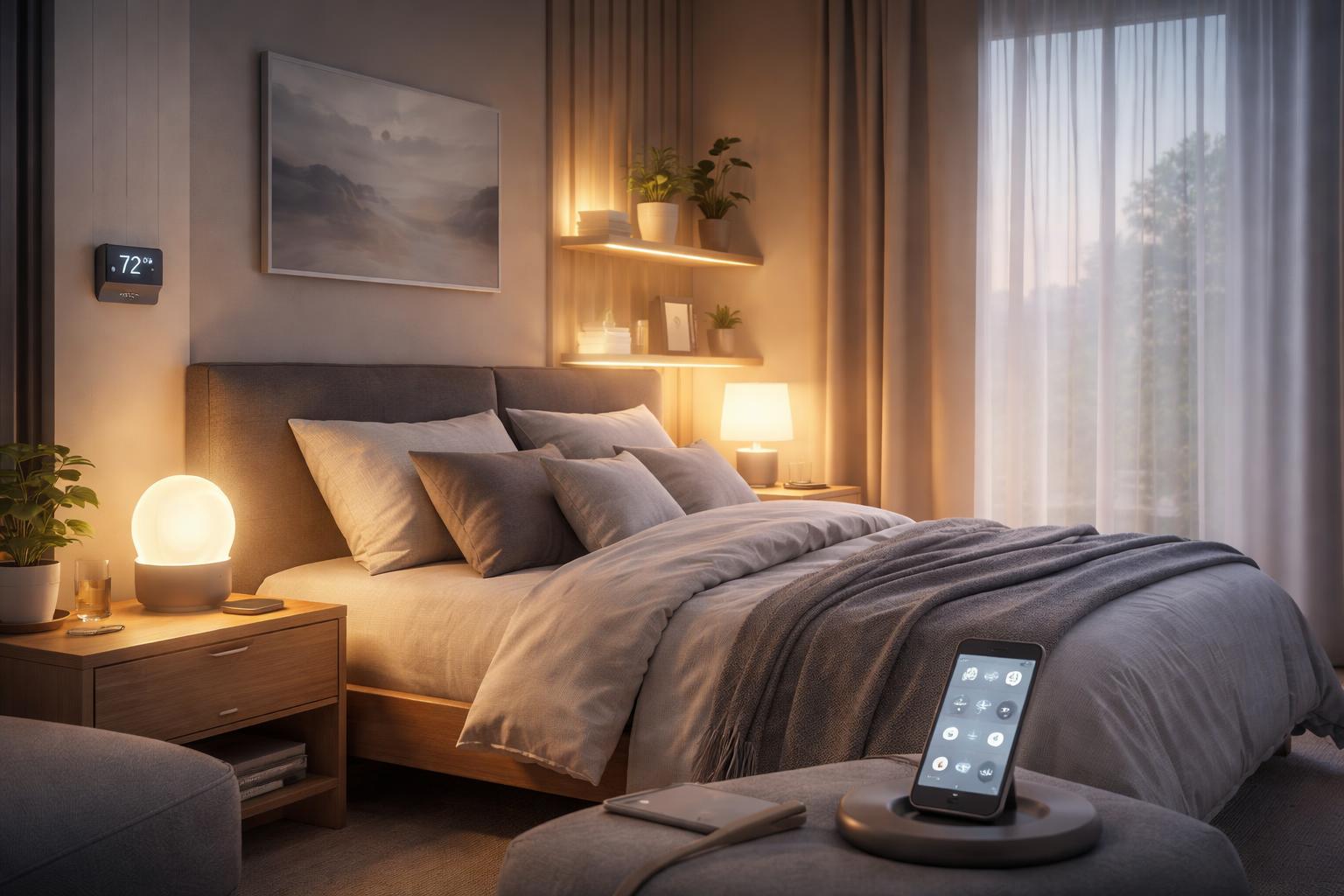
How to Create a Smart Bedroom for Better Sleep on Any Budget
Smart Sleep Solutions
Studies show that individuals who maintain a consistent, dim lighting environment in the hour before bed fall asleep 20% faster than those exposed to standard household light. If you struggle to wind down after a long day, your bedroom environment is likely working against your natural circadian rhythm.
The Essential Smart Bedroom Kit
You don't need a massive system to transform your sleep quality. A few targeted devices can automate your environment, removing the mental friction of preparing for bed. For more inspiration on how to build these routines, see our guide on how to create the perfect smart home nighttime routine for better sleep.
The All-in-One Sleep Assistant
The Hatch Restore 2 is best for people who want a dedicated bedside device that handles white noise, reading lights, and sunrise alarms without needing a smartphone in bed. It creates a calming sensory experience that replaces harsh phone alarms.
One downside: It requires a subscription to access the full library of soundscapes and guided meditations, which might be frustrating if you prefer one-time purchases.
Managing Air Quality
The Levoit Core 300S is best for allergy sufferers or those in dry, dusty climates who need quiet, consistent air filtration while they rest. Its smart features allow you to set a sleep mode that keeps the fan speed at a whisper-quiet level throughout the night.
One downside: The unit has a bright LED display on the top that can be distracting in a pitch-black room, though you can turn it off via the app.
Automating Your Bedside Lamp
The TP-Link Tapo Smart Plug is best for those on a tight budget who want to turn standard lamps into voice-controlled or scheduled lights. It allows you to trigger your bedroom lights to dim or turn off entirely at a set time each night.
One downside: It takes up more physical space than a standard outlet, which might block the second socket on your wall if your outlets are poorly positioned.
What to Look For Before You Buy
- Ecosystem Compatibility: Ensure your chosen devices work with your existing phone or voice assistant, such as Alexa or Google Home, to keep control centralized.
- Light Pollution: Check if devices have "night modes" or the ability to turn off indicator lights completely, as even a small glowing bulb can disrupt melatonin production.
- Setup Difficulty: Look for "plug-and-play" options if you are not comfortable with wiring, especially for smart plugs and air purifiers.
- Subscription Models: Verify whether a device requires an ongoing monthly fee to unlock core features, as these costs add up quickly.
Comparison of Recommended Devices
| Product | Primary Benefit | Best For |
|---|---|---|
| Hatch Restore 2 | Multifunctional sleep aid | Consistent sleep cycles |
| Levoit Core 300S | Air purification | Allergy & air quality |
| TP-Link Tapo Smart Plug | Simple automation | Budget-conscious users |
Who Should Buy This
The Early Riser: You want to wake up feeling refreshed rather than jarred by a loud phone alarm, and you appreciate light-based wake-up cues.
The Sensitive Sleeper: You are easily bothered by air quality, noise, or light, and you need a way to stabilize your environment automatically.
Frequently Asked Questions
Do I need a hub to connect these devices?
Most modern smart devices, including the ones mentioned here, connect directly to your home Wi-Fi network and do not require a separate bridge or hub. This simplifies the setup process significantly for beginners.
Will these devices work if my Wi-Fi goes down?
Basic scheduling features often remain stored on the device itself, but voice commands and app control will not function during an outage. Consider this a temporary inconvenience rather than a total system failure.
Is it better to use smart bulbs or smart plugs?
Smart bulbs offer color and brightness adjustments, while smart plugs are cheaper and work with any lamp you already own. If you just want to turn your lamp on and off, start with a smart plug.
Final Verdict
If you only buy one device, get the Hatch Restore 2. It tackles the two most important factors for sleep—sound and light—in one elegant package. Start by setting your "bedtime" routine in the app today to begin building a more consistent sleep habit tonight.