
Do Smart Air Quality Monitors Actually Work? Honest Review for Beginners
Why You Need More Than Just Your Nose
You might think your nose is the best tool for identifying poor indoor air quality, but by the time you notice a musty odor or feel the scratchiness of dust, the pollutants have already been affecting your health for hours. Most homeowners are surprised to learn that indoor air is often two to five times more polluted than the air outside, yet it is a hidden problem that lacks any physical indicator until symptoms like headaches or allergies emerge.
The Truth About How These Monitors Actually Function
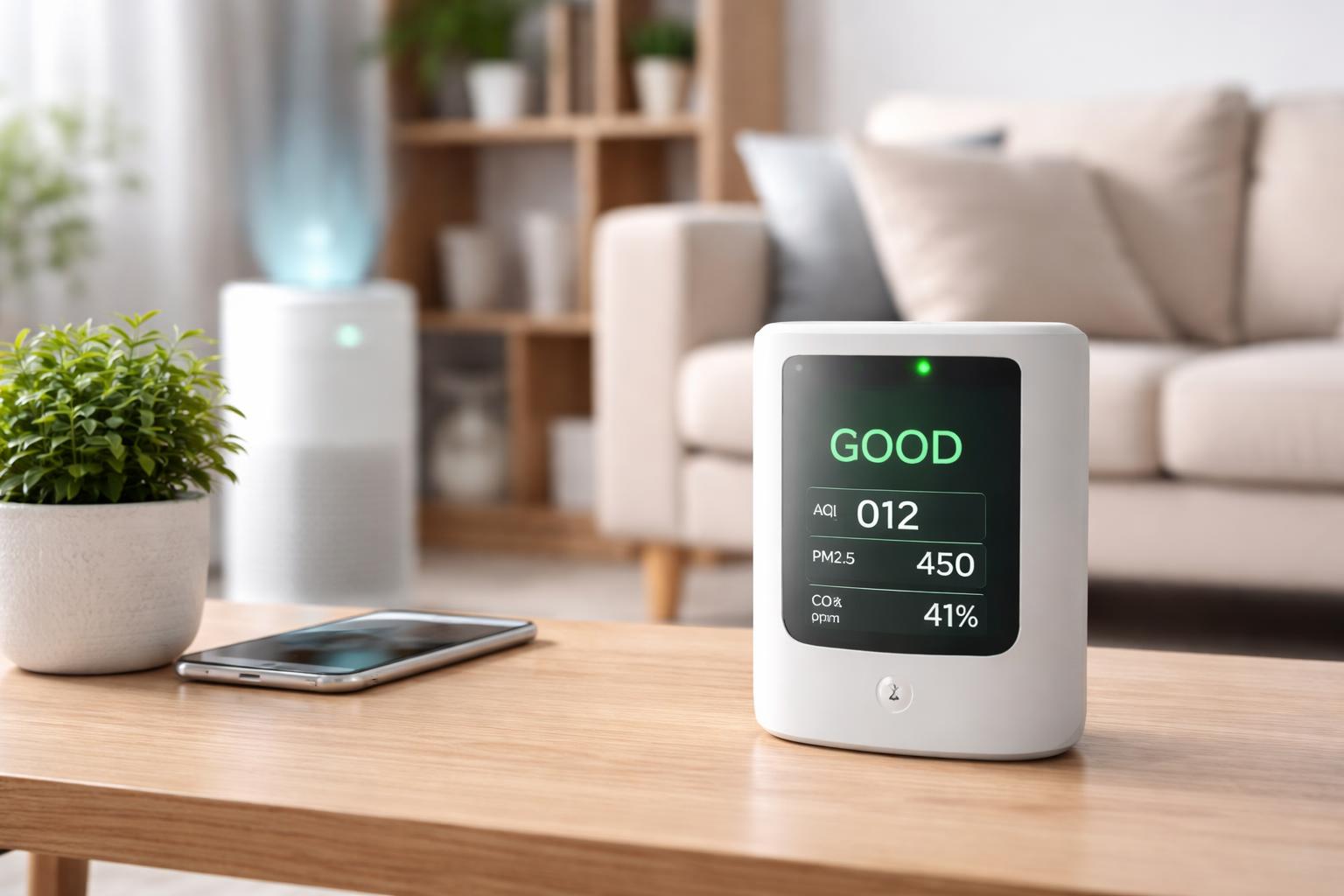
Smart air quality monitors operate by using specialized sensors to measure invisible threats. Common metrics include Volatile Organic Compounds (VOCs), particulate matter (PM2.5), carbon dioxide (CO2), temperature, and humidity. These devices take the data they collect and send it to your smartphone via an app, offering a real-time dashboard of your home’s health.
It is important to understand that a monitor does not "clean" the air on its own. Instead, it provides actionable data. For example, if your sensor shows a spike in PM2.5 levels, you might realize it is time to change your furnace filter or stop burning candles. The real value lies in identifying recurring patterns so you can fix the source of the problem rather than just masking the symptoms.
The Awair Element
The Awair Element is best for homeowners who want a comprehensive look at their environment, including detailed tracking of chemicals and allergens. One limitation to keep in mind is that it does not offer as robust a selection of smart home integrations as some competitors, meaning it functions best as a standalone tool.
The Airthings View Plus
The Airthings View Plus is best for those living in regions with high radon levels or basement-heavy homes, as it includes advanced radon detection capabilities. A downside is the high number of batteries required for long-term use if you don't keep it plugged into a power source, which can be an annoyance for some.
The Aranet4 Home
The Aranet4 Home is best for people who prioritize portability and CO2 tracking to improve their sleep or concentration. Its biggest limitation is that it lacks advanced VOC and chemical sensing capabilities, making it more of a focused ventilation assistant than a total air-quality laboratory.
What to Look For Before You Buy
- Specific Sensor Needs: Ensure the device monitors the pollutants relevant to your home, such as radon for basements or VOCs if you have new furniture or paint.
- Local vs. Cloud Data: Look for devices that offer data privacy if you are concerned about your home’s environmental habits being uploaded to external servers.
- Connectivity Requirements: Some monitors require a bridge or hub to talk to your phone, while others connect directly to your Wi-Fi or use Bluetooth.
- Integration Potential: If you want your air monitor to automatically trigger your smart air purifier, check if it works with your specific smart home platform.
Comparison of Top Smart Air Quality Monitors
| Model | Best For | Key Strength | Known Limitation |
|---|---|---|---|
| Awair Element | General Home Use | Excellent VOC tracking | Limited smart home integration |
| Airthings View Plus | Radon & Allergen Focus | Advanced radon sensor | Battery-intensive maintenance |
| Aranet4 Home | Ventilation & CO2 Focus | Highly portable design | No VOC or chemical sensing |
Who Should Buy This
The Allergy Sufferer: If you constantly battle sneezing or sinus issues, these monitors help you identify which rooms or times of day have the highest particulate counts.
The Concerned Parent: Parents often use these to ensure the nursery environment stays at optimal temperature and humidity levels while monitoring for chemical off-gassing from new toys or furniture.
The Home Office Professional: High CO2 levels often cause afternoon brain fog; tracking this can help you know exactly when to open a window to refresh your focus.
Frequently Asked Questions
Can these monitors tell me if I have mold?
While a monitor cannot directly "see" mold, it tracks humidity and temperature fluctuations. If the sensor shows consistently high humidity levels, it serves as a warning that your home is at risk for mold growth, allowing you to act before an infestation starts.
Do I need to calibrate these sensors regularly?
Most modern monitors are self-calibrating for common metrics like CO2 after a short break-in period. However, always check the manual, as some sensors need to be placed in fresh, outdoor air for a few hours occasionally to maintain their baseline accuracy.
Will this device make my air purifier work better?
Yes, if you use a smart plug or a smart air purifier, many monitors can trigger the purifier to turn on automatically when pollution levels rise. This ensures you are only cleaning the air when it is actually necessary, which saves energy and filter life.
Final Verdict
If you want the most well-rounded device for a typical household, the Awair Element is your best choice because of its balanced sensor suite and intuitive reporting. It provides the most actionable data for the average homeowner without requiring a science degree to interpret. To get started, place your new monitor in your bedroom for one week to establish a baseline for your nighttime air quality.