
Disclosure: This article contains affiliate links. As an Amazon Associate, we earn from qualifying purchases at no extra cost to you.
What’s The Best Smart Lighting System for Your Apartment? Philips Hue, Govee & More Compared
Choosing the best smart lighting system for your apartment ultimately depends on your specific needs, budget, and desired level of integration with existing smart home devices. While Philips Hue remains the gold standard for its extensive ecosystem and reliability, systems like Govee, Kasa Smart, Sengled, and LIFX offer compelling features and flexibility, especially for apartment living. Each brand brings unique strengths, from vibrant color customization to simple, hub-free setups, making it essential to consider what truly matters most for your personal space.
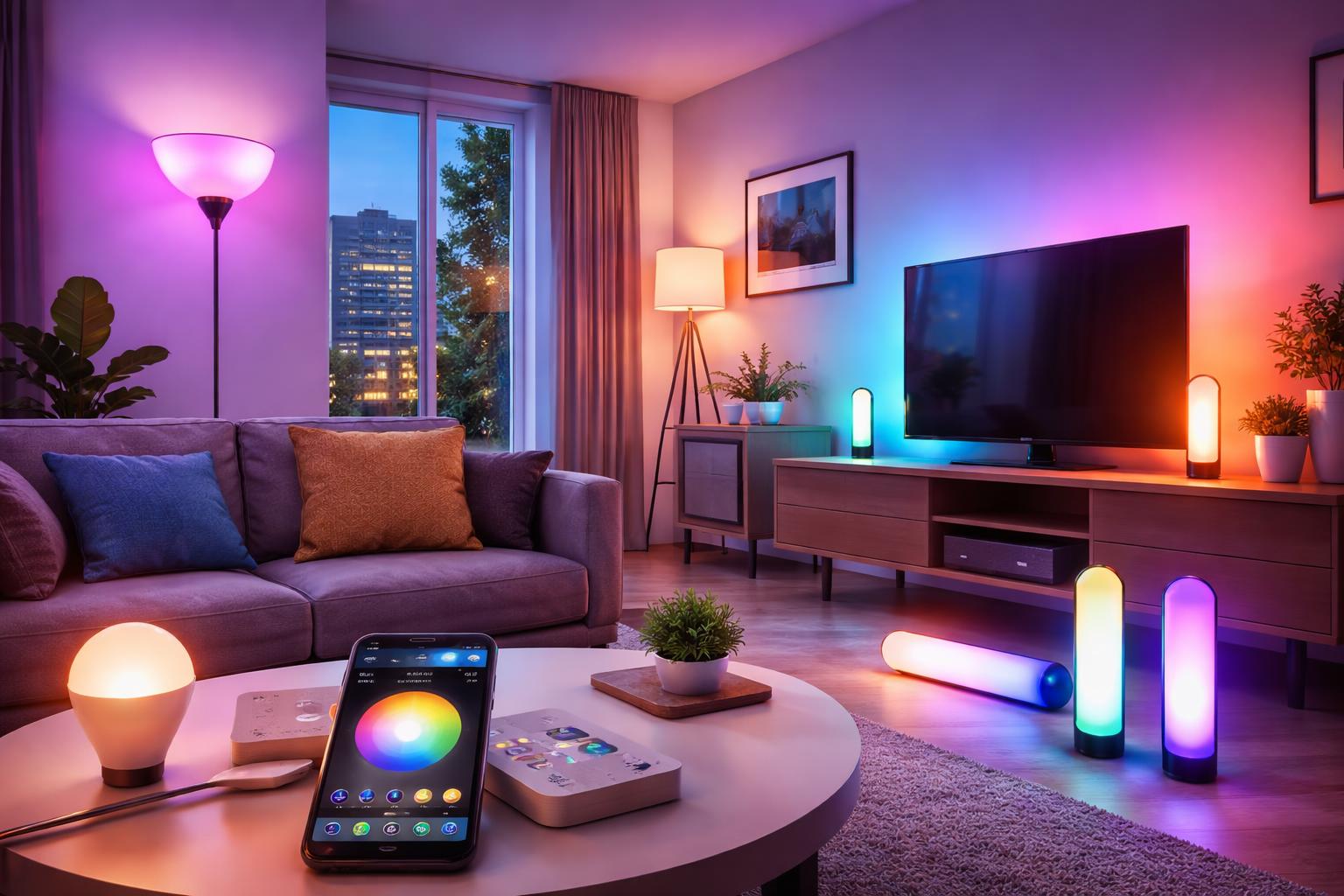
Smart lighting can transform any apartment, enhancing ambiance, improving security, and even boosting productivity. Whether you’re looking to set the perfect mood for a movie night, automate your lights to wake you up gently, or simply control your lighting with your voice, there’s a smart lighting system out there for you. Let’s explore into the key factors to consider and compare some of the leading options.
Factors to Consider When Choosing Smart Lighting for Your Apartment
Before you commit to a smart lighting system, it’s helpful to understand the various aspects that differentiate one from another. For apartment dwellers, these factors can be particularly important, as setup complexity, wireless range, and integration capabilities can significantly impact your experience.
Connectivity: Hub vs. Hub-Free
One of the first decisions you’ll encounter is whether you want a system that requires a dedicated hub or one that connects directly to your Wi-Fi network. Hub-based systems, like Philips Hue, use a central bridge to communicate with your smart bulbs. This often means a more robust and reliable connection, less congestion on your Wi-Fi network, and sometimes a greater range for your lights. However, it also means an extra device to set up and plug in. Hub-free systems, such as many Kasa Smart or LIFX bulbs, connect directly to your apartment’s Wi-Fi. These are generally easier to set up initially, as you simply screw in the bulb and connect it via an app. The trade-off can sometimes be increased Wi-Fi network congestion, potential limitations on the number of devices, or a slightly less stable connection if your Wi-Fi signal isn’t strong everywhere in your apartment.
Ecosystem and Compatibility
Consider how well the smart lighting system integrates with your existing smart home setup, or any future devices you plan to acquire. Do you use Google Assistant, Amazon Alexa, or Apple HomeKit for voice control? Most major smart lighting brands offer compatibility with these popular voice assistants, but the depth of integration can vary. Some systems play nicely with a wide array of smart devices, from smart thermostats to door locks, allowing for complex automations and scenes. Others might be more closed off, functioning primarily within their own brand’s ecosystem. For apartment living, where space might be limited, choosing a system that streamlines your smart home experience can be a huge benefit.
Features and Functionality
Smart lights offer a lot more than just on/off control. Think about what features are important to you. Do you want full-spectrum color control to set different moods? Or are you content with tunable white light that can adjust from warm to cool tones? Look for features like dimming capabilities, scheduling, geofencing (lights turn on/off when you arrive or leave), dynamic lighting effects (like simulating a sunrise), and music synchronization. Some systems excel in creating intricate light shows, while others focus on practical, everyday lighting needs. Consider also if you need specific form factors like light strips, outdoor lights (though less common for apartments), or specific lamp types.
Ease of Setup and Installation
For apartment renters, ease of setup is often a significant concern. You want a system that’s simple to install without requiring permanent modifications. Hub-free systems typically win here for their plug-and-play simplicity. For hub-based systems, the initial setup involves connecting the hub to your router, but once that’s done, adding individual bulbs is usually quick and intuitive. Consider the app experience as well; a well-designed, user-friendly app makes managing your lights much more enjoyable. Keep in mind that for many apartment setups, you might only need a handful of bulbs, so scaling up isn’t as critical as it might be for a larger home.
Expandability and Product Range
Even in an apartment, you might want to expand your smart lighting setup over time. Does the brand offer a wide range of products beyond standard bulbs, such as light strips, lamps, or smart plugs? A robust product ecosystem allows you to unify your lighting experience under a single app and system. While you might start with just a few bulbs in your living room, you might later decide to add a light strip behind your TV or smart plugs for your floor lamps. A system with a broad and accessible product line will give you more options for customization and future upgrades without having to mix and match different apps and ecosystems.
Top Smart Lighting Systems Compared
Now that we’ve covered the crucial factors, let’s look at some of the most popular and highly-rated smart lighting systems perfect for apartment living.
Philips Hue
Overview: Philips Hue is often considered the pioneer and premium choice in smart lighting. It offers the most comprehensive ecosystem, with a vast range of bulbs, light strips, lamps, and outdoor fixtures. Hue typically requires a bridge (hub) to connect your lights, which provides a dedicated Zigbee network for reliability and responsiveness. This also means your Wi-Fi isn’t bogged down by individual smart bulbs.
Pros for Apartments:
- Exceptional Reliability: The hub-based Zigbee connection offers superior stability and responsiveness, crucial for a seamless smart home experience.
- Broad Ecosystem: An unparalleled selection of products ensures you can find a Hue light for almost any need in your apartment.
- Advanced Features: Offers dynamic scenes, light recipes, entertainment syncing, and robust integration with major smart home platforms (Google Assistant, Alexa, HomeKit).
- User-Friendly App: The Philips Hue app is intuitive, powerful, and constantly updated with new features.
- Excellent Compatibility: Integrates smoothly with virtually every smart home platform and device.
Considerations for Apartments:
- Hub Requirement: While beneficial for performance, it means an extra device and connection.
- Initial Setup: Connecting the hub and initial pairing might take a little more effort than hub-free options.
Govee
Overview: Govee has rapidly gained popularity for its focus on vibrant, dynamic lighting effects, especially with its LED light strips and unique lamp designs. Govee products typically connect directly via Wi-Fi and Bluetooth, making them hub-free and relatively easy to set up. They are particularly known for their “DreamView” technology, which allows light strips to react to on-screen colors, and their extensive app-controlled customization options.
Pros for Apartments:
- Dynamic Effects: Govee excels in creating immersive, reactive lighting, perfect for entertainment setups, gaming, or accent lighting.
- Hub-Free Setup: Connects directly to Wi-Fi and Bluetooth, simplifying installation without needing a separate hub.
- Vibrant Colors: Known for producing exceptionally bright and saturated colors, enhancing ambiance significantly.
- Diverse Product Range: While not as broad as Hue, Govee offers innovative light strips, floor lamps, and unique panel lights.
- Music Sync: Many Govee products feature built-in microphones for responsive music synchronization.
Considerations for Apartments:
- Wi-Fi Dependence: Performance can be affected by Wi-Fi signal strength and network congestion.
- Integration: While compatible with Google Assistant and Alexa, its third-party integration isn’t as wide-ranging or deep as Philips Hue.
Kasa Smart (TP-Link)
Overview: Kasa Smart, from TP-Link, offers a simple and user-friendly entry into smart lighting. Their bulbs and smart plugs are almost exclusively hub-free, connecting directly to your home Wi-Fi. Kasa focuses on reliability and simplicity, making it an excellent choice for those who want essential smart lighting features without overcomplicating things. Their product line includes standard bulbs, light strips, and smart plugs.
Pros for Apartments:
- Hub-Free Convenience: Extremely easy to set up and manage directly from your Wi-Fi network.
- Reliable Performance: Kasa products are generally very stable and responsive, even without a hub.
- Simple App Interface: The Kasa Smart app is intuitive and easy to navigate, ideal for beginners.
- Core Smart Features: Offers essential features like scheduling, dimming, color control (for RGB bulbs), and remote access.
- Good Value: Provides solid smart lighting functionality without significant commitment.
Considerations for Apartments:
- Limited Ecosystem: While offering essential smart home devices, the lighting product range isn’t as extensive as Hue or Govee.
- Less Advanced Effects: Primarily focused on practical lighting, with fewer advanced dynamic lighting effects compared to Govee.
Sengled
Overview: Sengled provides a range of smart lighting options, often at a more accessible entry point. They offer both hub-free Wi-Fi bulbs and Zigbee bulbs that can connect to a Sengled hub or compatible third-party hubs (like Amazon Echo devices with built-in Zigbee hubs). Sengled is known for its practical, reliable, and energy-efficient smart lighting solutions, including unique options like bulbs with built-in speakers or security cameras.
Pros for Apartments:
- Versatile Connectivity: Choice of Wi-Fi (hub-free) or Zigbee (optional hub or compatible smart speaker hub) options.
- Energy Efficiency: Focuses on creating energy-saving smart lighting solutions.
- Unique Bulbs: Offers specialty bulbs like those with integrated speakers (Sengled Pulse) or security cameras, which can be useful for apartment dwellers looking to consolidate devices.
- Good Basic Functionality: Provides reliable dimming, color control, and scheduling features.
Considerations for Apartments:
- App Experience: While functional, the Sengled Home app might not be as polished or feature-rich as Hue or Govee.
- Ecosystem Depth: Product range is good but doesn’t quite match the breadth of Philips Hue.
LIFX
Overview: LIFX bulbs are known for their exceptional brightness, vibrant colors, and unique software features. They are hub-free, connecting directly to your Wi-Fi network, and boast some of the highest lumen outputs among smart bulbs. LIFX prides itself on deep, rich colors and a wide array of dynamic effects controllable through its intuitive app. Their product line includes standard bulbs, light strips, and unique tile-based lighting solutions.
Pros for Apartments:
- Exceptional Brightness and Color: LIFX bulbs are among the brightest on the market and produce stunningly rich and accurate colors.
- Hub-Free: Easy setup by connecting directly to your Wi-Fi network.
- Advanced Effects: Offers unique features like “Paint” to apply multiple colors to a single bulb, “Effects” for dynamic patterns, and excellent music visualization.
- Great App: The LIFX app is feature-packed and easy to use, providing granular control over your lighting.
- Strong Integrations: Works well with major smart home platforms including Google Assistant, Alexa, and HomeKit.
Considerations for Apartments:
- Wi-Fi Network Impact: As hub-free devices, a large number of LIFX bulbs can potentially put more strain on your Wi-Fi network.
- Connectivity Issues: Like any Wi-Fi dependent smart device, performance can occasionally be susceptible to network interference or signal strength.
Comparison Table
Here’s a quick overview of how these top smart lighting systems stack up for apartment use:
| Feature | Philips Hue | Govee | Kasa Smart | Sengled | LIFX |
|---|---|---|---|---|---|
| Connectivity | Hub (Zigbee) | Wi-Fi & Bluetooth | Wi-Fi | Wi-Fi or Zigbee (optional hub) | Wi-Fi |
| Ecosystem Size | Extensive | Moderate (focus on strips/effects) | Moderate (core devices) | Moderate (incl. unique bulbs) | Moderate (focus on high-end lighting) |
| Color Quality/Brightness | Excellent | Excellent (vibrant effects) | Good | Good | Superior (brightest, rich colors) |
| Advanced Effects | High | Very High (dynamic, reactive) | Low-Moderate | Low-Moderate | High (unique features like Paint) |
| Setup Simplicity | Moderate (hub initial) | Easy (hub-free) | Very Easy (hub-free) | Easy (Wi-Fi) / Moderate (Zigbee) | Easy (hub-free) |
| Smart Home Integration | Excellent | Good | Excellent | Good | Excellent |
Integrating Smart Lighting with Your Apartment’s Smart Home
No smart lighting setup is complete without seamless integration into your broader smart home ecosystem. For apartment living, where space and ease of use are paramount, voice control and unified control are powerful tools. Most modern smart lighting systems offer robust compatibility with leading smart assistants.
- Voice Control: Connecting your smart lights to a smart speaker like an Amazon Echo Dot or a smart display like a Google Nest Hub allows for effortless voice commands. Imagine walking into your apartment and simply saying, “Alexa, turn on the living room lights,” or “Hey Google, set the kitchen to soft white.” This hands-free convenience is incredibly liberating.
- Routines and Automations: Beyond simple voice commands, you can set up powerful routines. Have your lights gradually brighten in the morning to simulate a sunrise, or automatically turn off when you leave the apartment using geofencing. You can create “Movie Night” scenes that dim the lights and change them to a warm glow, activated with a single command.
- Smart Home Hubs: If you’re building a more extensive smart home, a central hub can tie everything together. Devices like the Google Nest Hub and Amazon Echo Dot not only provide voice control but can also act as central controllers for a variety of smart devices, including lights, thermostats, and smart plugs. This creates a more cohesive and automated environment, perfect for a modern apartment.
Tips for Apartment Dwellers and Smart Lighting
Living in an apartment presents unique considerations for smart lighting. Here are a few tips to make the most of your setup:
- Start Small: You don’t need to outfit your entire apartment at once. Begin with the rooms you use most, like the living room or bedroom. You can always expand later.
- Focus on Key Areas: Prioritize areas where smart lighting will have the biggest impact, such as accent lighting behind a TV with a Govee strip, or functional lighting in your main living space with Philips Hue or Kasa Smart bulbs.
- Consider Portability: If you anticipate moving frequently, hub-free systems or those with minimal components might be easier to pack up and set up again in a new place.
- Leverage Smart Plugs: For lamps that don’t use standard bulbs, or for appliances you want to control, smart plugs (often offered by the same brands like Kasa Smart or Sengled) are an excellent solution to bring “dumb” devices into your smart home ecosystem.
- Enhance Security: Use smart lights to simulate occupancy when you’re away. Scheduling lights to turn on and off at varying times can deter potential intruders, adding a layer of security to your apartment.
- Improve Well-being: Experiment with tunable white lights to mimic natural daylight cycles. Warm, dim lights in the evening can help you wind down, while cool, bright lights in the morning can boost alertness.
Frequently Asked Questions (FAQ)
Do I need a smart home hub for smart lighting in my apartment?
Not necessarily. Many smart light bulbs, like those from Kasa Smart, Govee, and LIFX, connect directly to your apartment’s Wi-Fi network and don’t require a separate hub. Other systems, like Philips Hue, use a dedicated hub for enhanced reliability and performance. Some smart speakers, like certain Amazon Echo models, also have built-in Zigbee hubs that can control compatible bulbs from brands like Sengled.
Can I install smart lights in a rented apartment?
Yes, absolutely! Most smart light bulbs simply screw into existing light sockets, just like traditional bulbs. Light strips usually come with adhesive backing that can be removed without damage, making them perfect for temporary installation in apartments. Smart plugs just plug into existing outlets. Smart lighting systems are generally non-invasive and can be easily removed when you move out.
Are smart lights worth it for a small apartment?
Definitely! Even in a small apartment, smart lights offer significant benefits. They can transform the ambiance, make spaces feel larger, improve convenience with voice control and scheduling, and even help you save energy. The ability to customize colors and brightness can make your apartment feel more personalized and dynamic.
What’s the difference between tunable white and color-changing smart bulbs?
Tunable white smart bulbs allow you to adjust the color temperature of white light, from warm (yellowish) to cool (bluish) tones, as well as dimming. This is great for setting different moods or supporting your circadian rhythm. Color-changing (RGB) smart bulbs offer all the features of tunable white bulbs but can also display millions of different colors, opening up a world of creative lighting possibilities.
Can smart lights integrate with my apartment’s existing light switches?
Direct integration with existing wall switches can be tricky as smart bulbs need constant power to remain “smart.” However, you can often add smart dimmer switches or remote controls from the same brand (e.g., Philips Hue Dimmer Switch) that can control your smart bulbs wirelessly without interfering with their smart capabilities. Alternatively, you can use smart plugs for lamps that are controlled by a wall switch, effectively making the entire outlet smart.
Conclusion
Choosing the best smart lighting system for your apartment is an exciting step toward a more connected and comfortable living space. While Philips Hue stands out for its comprehensive ecosystem and unmatched reliability, Govee dazzles with dynamic effects, Kasa Smart offers easy, hub-free simplicity, Sengled provides versatile and unique options, and LIFX delivers superior brightness and vibrant colors. Consider your priorities—whether it’s vivid colors, simple setup, broad integration, or a robust ecosystem—and you’ll find a system that perfectly illuminates your apartment life. Whichever you choose, smart lighting is a fantastic upgrade that offers convenience, ambiance, and a touch of modern living.