
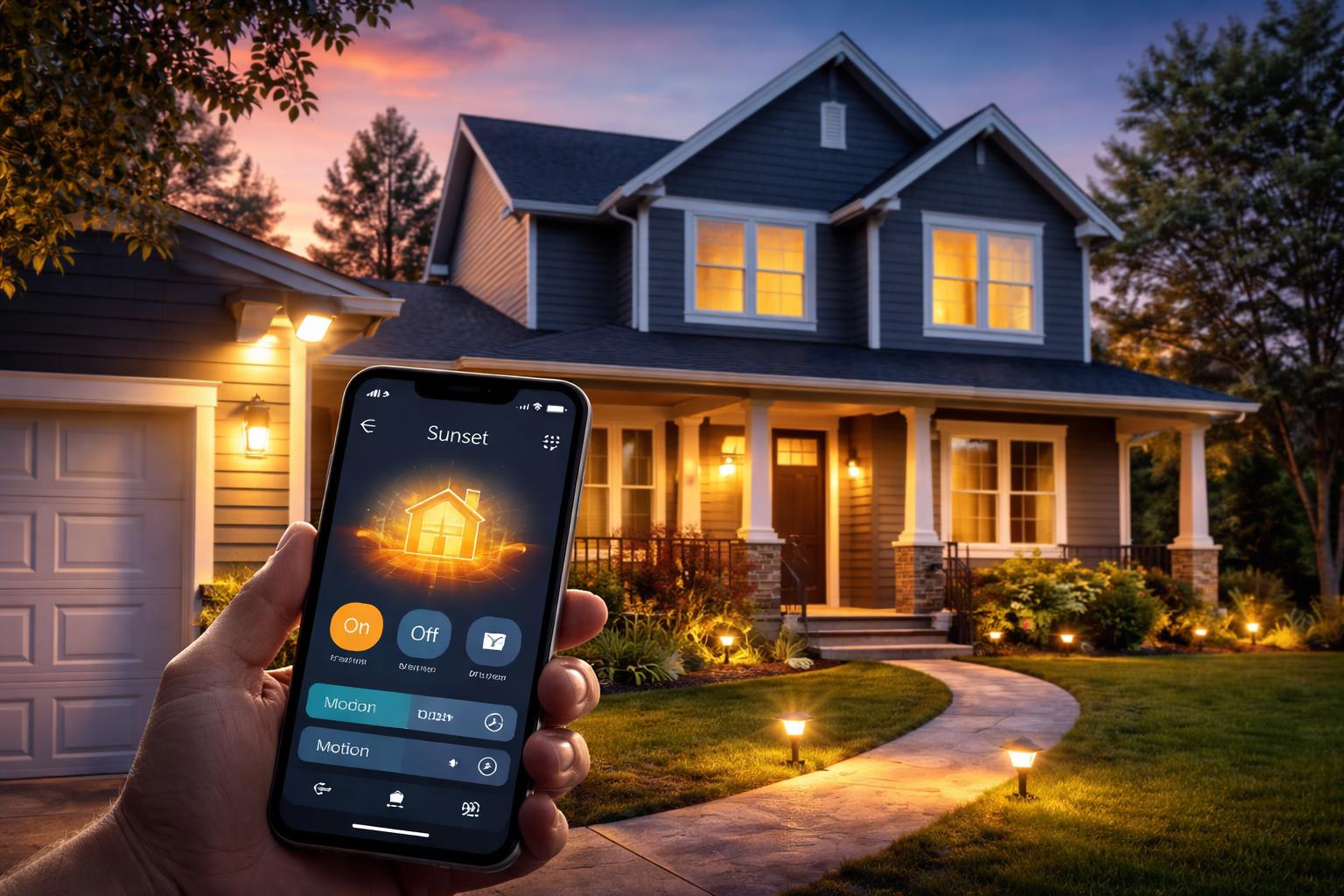
How to Automate Your Outdoor Lights: Sunset Schedules, Motion Triggers and More
Stop Wasting Electricity on Outdoor Lights
If you have ever arrived home after dark only to realize you left your porch lights off all day, you are wasting energy and money while leaving your home uninviting. Automating your outdoor lighting ensures your path is always lit when you pull into the driveway and keeps your home looking occupied even when you are miles away.
Choose the Right Automation Method
You do not need to replace every fixture to gain smart control. There are three primary ways to bring your outdoor lights into the digital age, depending on your current setup and budget.
Smart Plugs for Plug-In Lights
If your lights plug into an outdoor wall outlet, a weather-resistant smart plug is the most cost-effective solution. The Kasa outdoor smart plug is best for homeowners who want a durable, simple way to manage string lights or porch lanterns without wiring changes. The main limitation is that it requires your outdoor outlet to be within range of your home Wi-Fi network, which can be tricky for detached garages or deep backyards.
Smart Bulbs for Existing Fixtures
If you have standard light fixtures, replacing your current bulbs with weather-rated smart bulbs is a popular route. The Philips Hue outdoor lighting system is best for those who want total control over color, brightness, and advanced scheduling. A common mistake users make is assuming all smart bulbs are weather-proof; always check for an IP rating, as standard indoor bulbs will fail quickly if exposed to moisture.
Smart Switches for Hardwired Lighting
For floodlights or main entry lights that are wired into your walls, replacing the wall switch with a smart version is the cleanest option. This allows you to retain your existing fixtures while gaining app control and automation features. Note that this requires basic electrical knowledge, as you will need to identify your neutral wire to ensure the switch functions properly.
What to Look For Before You Buy
- Weather Rating: Look for an "IP" rating; anything labeled IP65 or higher is designed to handle rain and snow without short-circuiting.
- Connectivity Range: If your lights are far from your router, consider devices that support a mesh network or use a dedicated hub to ensure reliable signal reach.
- Automation Features: Prioritize devices that support "dusk-to-dawn" scheduling based on your local sunrise and sunset times, rather than fixed clock times that become inaccurate as the seasons change.
- Voice Integration: Ensure your chosen hardware works with your preferred assistant, like Alexa or Google Home, so you can turn lights on with a simple voice command if you are carrying groceries.
Comparison of Recommended Devices
| Device | Best For | Connection Type |
|---|---|---|
| Kasa Outdoor Plug | Simple, plug-in string lights | Wi-Fi |
| Philips Hue Outdoor | Custom colors and advanced scenes | Zigbee/Bridge |
| Amazon Echo Dot | Voice control hub for all devices | Wi-Fi |
Who Should Buy This
The Safety-Conscious Homeowner: If you want your home to look occupied while you are traveling, automation allows you to randomize your light schedules to mimic your daily habits.
The Convenience Seeker: If you struggle to reach switches or constantly forget to turn lights off, these devices pay for themselves by eliminating unnecessary power usage.
Frequently Asked Questions
Can I use indoor smart plugs outdoors?
Never use an indoor smart plug outside, as they are not protected against moisture and can pose a significant fire or electrical shock hazard. Always use devices specifically labeled as weather-resistant or outdoor-rated.
Do I need a smart home hub?
It depends on your device; Wi-Fi-based smart plugs connect directly to your router, while some lighting systems require a hub to communicate with your app. If you plan to add many devices, a hub is often more reliable than crowding your home Wi-Fi network.
What happens if the power goes out?
Most smart devices are designed to reconnect to your network automatically once the power is restored. However, you may need to check your schedule settings in the app to ensure they are still active if the outage was long enough to reset the device's clock.
Final Verdict
For most homeowners, the Kasa outdoor smart plug is the clear winner because it offers the easiest installation and high reliability without requiring a separate hub. If you are just starting your smart home, pair this with an Amazon Echo Dot to enable easy voice commands for your new automated routines. To get started today, check your outdoor outlet configuration and select a smart plug that fits your needs.