
Disclosure: This article contains affiliate links. As an Amazon Associate, we earn from qualifying purchases at no extra cost to you.
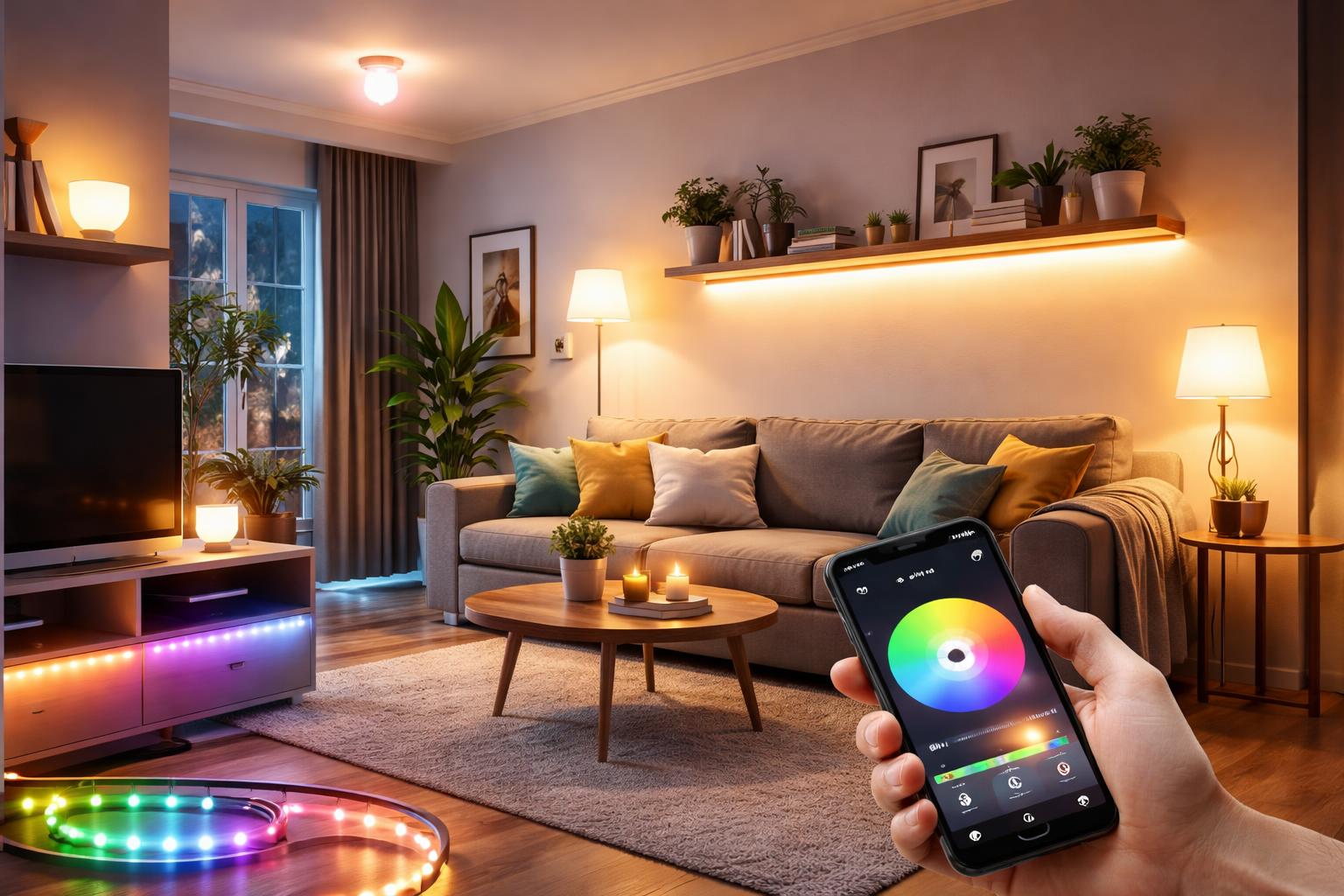
Yes, you can dramatically improve your apartment’s lighting without any permanent wiring or modifications, making it an ideal solution for renters. Smart LED bulbs and light strips offer a flexible, non-invasive, and completely reversible way to transform the ambiance, functionality, and energy efficiency of your living space, giving you full control over your environment from the palm of your hand.
Why Smart Lighting is a Powerful Tool for Renters
Renting often comes with restrictions on making permanent changes to your apartment, especially when it comes to electrical work. This can make upgrading drab, standard lighting feel like an impossible task. However, smart lighting technology is specifically designed to bypass these limitations, offering a wealth of benefits tailored for the modern renter:
- No Wiring or Installation Hassles: The biggest advantage is that smart bulbs simply screw into existing fixtures, and light strips attach with adhesive. There’s no need to call an electrician, pull wires, or even use tools beyond perhaps a step stool. This means no damage to walls or ceilings, ensuring you get your security deposit back.
- Instant Ambiance Control: Say goodbye to harsh, single-setting lighting. Smart bulbs and strips allow you to dim lights, change their color temperature from warm to cool white, or even select from millions of colors to match your mood, time of day, or activity. Create a cozy reading nook, a vibrant party atmosphere, or a focused workspace with ease.
- Energy Efficiency: Smart LED lighting consumes significantly less power than traditional incandescent bulbs, helping you save on your electricity bill. Many smart lights also track energy usage, giving you insight into your consumption habits.
- Automation and Convenience: Schedule lights to turn on and off automatically, simulate occupancy while you’re away, or integrate them with voice assistants like Alexa or Google Assistant for hands-free control. Wake up to gradually brightening lights or set a bedtime routine where lights slowly dim.
- Portability: When it’s time to move, you can simply unscrew your smart bulbs and peel off your light strips, taking your entire smart lighting system with you to your next home. It’s an investment that moves with you.
Understanding Your Smart Lighting Options
The world of smart lighting can seem vast, but for renters, the primary focus narrows down to a few key categories: smart LED bulbs, LED light strips, and smart plugs. Each offers unique advantages for different applications.
Smart LED Bulbs
These are the most common entry point into smart lighting. They look and function like traditional bulbs but contain built-in technology that allows them to connect to your home network, typically via Wi-Fi or Bluetooth, or through a dedicated hub.
- Ease of Installation: Simply unscrew your old bulb and screw in the new smart bulb. That’s it!
- Versatility: Available in various forms, including standard E26 base bulbs, BR30 floodlights for recessed lighting, candelabra, and GU10 spotlights. This means you can upgrade almost any existing fixture in your apartment.
- Types of Smart Bulbs:
- Dimmable White: These offer adjustable brightness and often tunable white light, allowing you to switch between warm, soft light and cool, bright light.
- Color-Changing (RGBW): The most popular choice, offering millions of colors in addition to tunable whites. Perfect for creating moods and themes.
- Filament Style: For a more vintage look, some smart bulbs mimic the exposed filament aesthetic while still offering smart features.
- Popular Brands:
- Philips Hue Smart Bulbs are a popular choice known for their robust ecosystem, vibrant colors, and extensive third-party integrations, often requiring a Hue Bridge (hub) for full functionality.
- Kasa Smart Light Bulbs offer an excellent hub-less experience, connecting directly to your Wi-Fi network for easy setup and control.
- Sengled Smart Light Bulbs provide a range of affordable options, from simple dimmable white to color-changing, some requiring a hub and others connecting directly via Wi-Fi.
- LIFX Smart Bulbs are renowned for their brightness, vivid color reproduction, and hub-less Wi-Fi connectivity, offering a premium experience without a separate bridge.
Smart LED Light Strips
Light strips are flexible, adhesive-backed strips of LEDs that can be used to add accent lighting, backlighting, or task lighting in creative ways.
- Creative Applications: Ideal for under-cabinet lighting in the kitchen, behind your TV for bias lighting, along shelves, under beds, or outlining architectural features. They can transform a space with indirect lighting.
- Easy Installation: Most come with a peel-and-stick adhesive backing. Simply clean the surface, peel, and press. They can often be cut to length (at designated points) and connected with extensions or corners.
- Color and Dynamic Effects: Like smart bulbs, many strips offer millions of colors and tunable white options. Some advanced strips can even display multiple colors at once or create dynamic, flowing light effects.
- Popular Brands: Govee LED Strip Lights are highly regarded for their innovative features, including segment control, music synchronization, and a wide range of vibrant colors, all controllable via a user-friendly app.
Smart Plugs
While not technically lighting themselves, smart plugs are invaluable for renters as they can turn any “dumb” lamp or string light into a smart light.
- Transform Existing Lamps: Plug your favorite floor lamp, table lamp, or even string lights into a smart plug, and instantly gain app control, scheduling, and voice control capabilities for that fixture.
- Simplicity: No need to replace bulbs if you love your current lamp and its shade. The smart plug simply acts as a remote switch.
- Added Functionality: Beyond lighting, smart plugs can also control other small appliances like fans, coffee makers, or humidifiers, extending your smart home ecosystem.
- Popular Brands: TP-Link Kasa Smart Plugs are a reliable and user-friendly option, connecting directly to your Wi-Fi network and offering robust scheduling and remote control features.
Key Features to Look For When Choosing Smart Lighting
As you explore options, consider these features to ensure your smart lighting meets your specific needs:
- Connectivity:
- Wi-Fi: Many bulbs and strips connect directly to your home Wi-Fi network, requiring no separate hub. This is often the simplest setup for renters.
- Bluetooth: Some devices use Bluetooth for local control, which is great if you only need to control lights from a short distance and don’t want to rely on Wi-Fi or a hub.
- Hub-based (Zigbee/Z-Wave): Systems like Philips Hue use a dedicated hub (bridge) that connects to your router. This can offer greater reliability, range, and support for more devices, but it’s an additional piece of hardware.
- Color and Brightness: Decide if you need tunable white, full-color (RGBW), or just dimmable white lights. Check the lumen output to ensure they’re bright enough for your space.
- App Control: A well-designed, intuitive app is crucial for managing your lights, setting schedules, and creating scenes.
- Voice Control Integration: Ensure compatibility with your preferred voice assistant (Amazon Alexa, Google Assistant, Apple HomeKit) if hands-free control is important to you.
- Scheduling and Timers: Essential for automating your lighting routines.
- Scenes and Presets: Pre-programmed or custom lighting configurations for different moods or activities (e.g., “Movie Night,” “Morning Coffee,” “Relax”).
- Geofencing: Lights turn on/off automatically when you enter or leave your apartment.
- Music Sync: Some light strips and bulbs can sync with music, creating dynamic light shows.
Setting Up Your Smart Home Ecosystem: Hub vs. Hub-less
Choosing between a hub-based or hub-less system is a fundamental decision for renters.
Hub-less Systems (Direct Wi-Fi)
Many smart lighting brands, such as Kasa Smart, LIFX, and Govee, connect directly to your apartment’s Wi-Fi network.
- Pros: Simpler setup, fewer devices, often more affordable entry point. You just need your Wi-Fi router and the smart device.
- Cons: Can sometimes put a strain on your Wi-Fi network if you have many devices. Performance can be affected by Wi-Fi signal strength.
- Ideal for: Renters looking for a simple, easy-to-expand system without extra hardware.
Hub-Based Systems (e.g., Philips Hue)
Brands like Philips Hue use a central bridge or hub that connects to your router, and then your smart lights communicate with this hub, typically using a protocol like Zigbee.
- Pros: More reliable and stable network for a larger number of devices. Dedicated network often means less strain on your Wi-Fi. Extended range.
- Cons: Requires an additional piece of hardware (the hub) and an extra setup step. Can be a slightly higher initial investment.
- Ideal for: Renters who plan to build a more extensive smart lighting system or desire maximum reliability and integration capabilities.
Creative Lighting Ideas for Your Apartment
Once you have your smart lights, the real fun begins. Here are some ideas to inspire your apartment transformation:
- Ambient Glow: Use smart bulbs in ceiling fixtures and floor lamps. Dim them to a warm white for evenings, or brighten to a cool white for daytime tasks.
- Accentuate Features: Place light strips behind your TV, under floating shelves, or inside glass cabinets to highlight decor and create depth.
- Task Lighting: Bright, cool-toned smart bulbs in desk lamps or kitchen fixtures can improve focus and visibility for specific activities.
- Mood Lighting: Experiment with colored bulbs in lamps in corners or behind furniture to wash walls with subtle hues. Red for romance, blue for relaxation, green for nature.
- Dynamic Scenes: Create a “movie night” scene that dims the main lights and turns on subtle accent lighting. A “morning” scene that gradually brightens to wake you gently.
- Bedroom Sanctuary: Use smart bulbs with tunable white features for a soft, warm glow before bed and a brighter, cooler light for getting ready in the morning.
- Bathroom Refresh: A smart bulb in your vanity light can offer adjustable brightness for makeup application or a calming blue hue for a relaxing bath.
Comparison Table: Popular Smart Bulb Brands for Renters
Here’s a quick overview of some top smart bulb options, highlighting features relevant to apartment dwellers.
| Feature | Philips Hue | Kasa Smart | LIFX | Sengled |
|---|---|---|---|---|
| Connectivity | Hub (Zigbee) & Bluetooth | Wi-Fi (Hub-less) | Wi-Fi (Hub-less) | Wi-Fi or Hub (Zigbee) options |
| Color Options | Tunable White, Full Color | Tunable White, Full Color | Tunable White, Full Color (vibrant) | Tunable White, Full Color |
| Brightness | Good (up to 1600 lumens) | Good (up to 1000 lumens) | Excellent (up to 1100 lumens) | Good (up to 800 lumens) |
| Ecosystem Size | Large, many integrations | Growing, Kasa ecosystem | Moderate, good integrations | Growing, diverse products |
| Voice Assistant | Alexa, Google, HomeKit | Alexa, Google | Alexa, Google, HomeKit | Alexa, Google (depends on model) |
| Ease of Setup | Simple (hub setup adds step) | Very Simple | Simple | Simple |
FAQ: Smart Lighting for Renters
Q1: Will smart lights affect my apartment’s electrical system or violate my lease?
No. Smart LED bulbs simply screw into your existing light sockets, just like regular bulbs. LED light strips attach with removable adhesive. Neither requires any changes to your apartment’s electrical wiring or fixtures, so they won’t damage anything or violate typical lease agreements. They are entirely reversible.
Q2: Can I take my smart lights with me when I move out of my apartment?
Absolutely! This is one of the biggest advantages for renters. Smart bulbs can be unscrewed and packed like any other personal item. Light strips can typically be carefully peeled off walls or furniture without leaving residue, especially if you use high-quality strips or test a small area first. Your investment moves with you.
Q3: Do I need to buy a smart home hub to use smart lighting in my apartment?
Not necessarily. Many smart bulbs and light strips, such as those from Kasa Smart and LIFX, connect directly to your apartment’s Wi-Fi network and are controlled via an app on your smartphone or voice assistant. Other systems, like Philips Hue, do use a separate hub (bridge) for enhanced performance and features. Both hub-based and hub-less options are renter-friendly.
Q4: How many smart lights can I have in my apartment without overwhelming my Wi-Fi?
The number of devices your Wi-Fi can handle depends on your router’s capabilities and the quality of your internet service. Most modern routers can comfortably handle dozens of smart home devices. If you’re building a very extensive system (e.g., more than 50-70 Wi-Fi devices), a hub-based system might offload some traffic from your Wi-Fi, or you might consider upgrading your router. For a typical apartment with 10-20 smart lights, a standard Wi-Fi setup should be fine.
Q5: Are smart light strips safe for walls and furniture when removed?
Most reputable brands design their LED light strips with adhesives that are strong enough to hold but also designed for clean removal on most finished surfaces. However, results can vary based on the surface material (e.g., painted drywall, wood, metal) and how long the strip has been in place. It’s always a good practice to clean the surface thoroughly before application and to gently peel them off when removing. Test a small, inconspicuous area first if you’re concerned.
Conclusion
Transforming your apartment’s lighting environment is no longer limited by your rental agreement. With smart LED bulbs, versatile light strips, and handy smart plugs, renters have an unprecedented opportunity to personalize their space, enhance convenience, and even save on energy – all without touching a single wire or risking a security deposit. Embrace the flexibility and freedom that smart lighting offers, and create an apartment that truly feels like home, illuminated exactly how you like it.